By Arslan Hajiyev, Founder, H Memorial Group · Published · Last updated · 7 min read

A grave marker is a flat or low-profile memorial that lies flush with, or slightly above, the ground. A headstone is an upright stone that stands at the head of the grave. Both identify who is buried there; they differ in height, weight, price and which cemetery sections accept them. If the cemetery section is a lawn or memorial-park section, a flat marker is often the only option, so confirm the rules before choosing.
Key Takeaways
- A grave marker is flat or low-profile; a headstone is an upright stone.
- The VA flat granite marker is 24 × 12 × 4 in (about 130 lb); the VA upright headstone is 42 × 13 × 4 in (about 230 lb).
- In our catalog, flat granite markers start at $198; upright headstones start at $1,058.
- The cemetery’s written rules decide which type is allowed in a given section.
What is a grave marker?
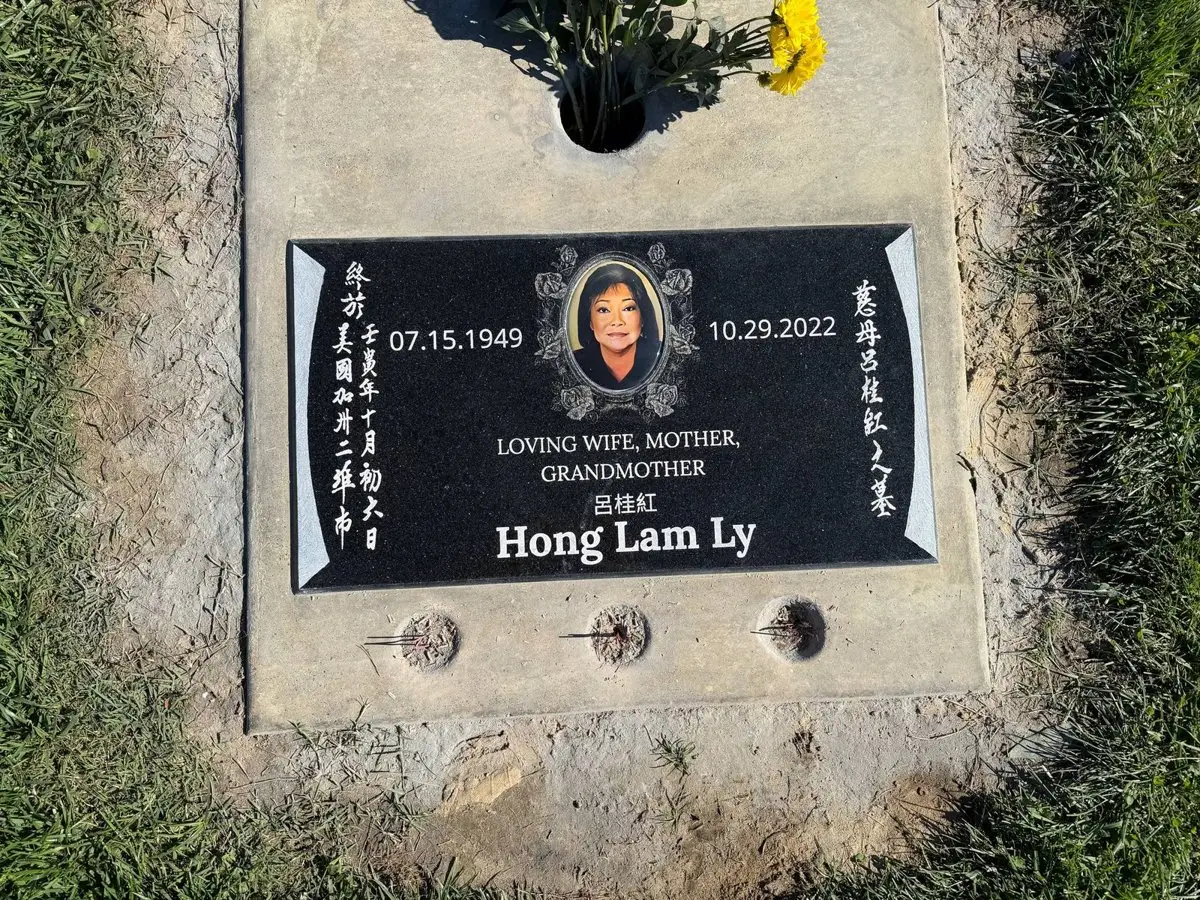
A grave marker is a memorial stone designed to sit at or near ground level. Flat (flush) markers are set level with the turf so mowers can pass over them; bevel markers are raised a few inches with a slightly angled face that is easier to read.
For scale, the U.S. Department of Veterans Affairs lists its flat granite and flat marble grave markers at 24 × 12 × 4 inches. Each weighs approximately 130 pounds. Private flat markers come in many sizes. Our flat granite headstones range from 16 × 8 in to 28 × 16 in. Our bevel markers range from 20 × 10 × 4 in to 42 × 16 × 4 in.
What is a headstone?
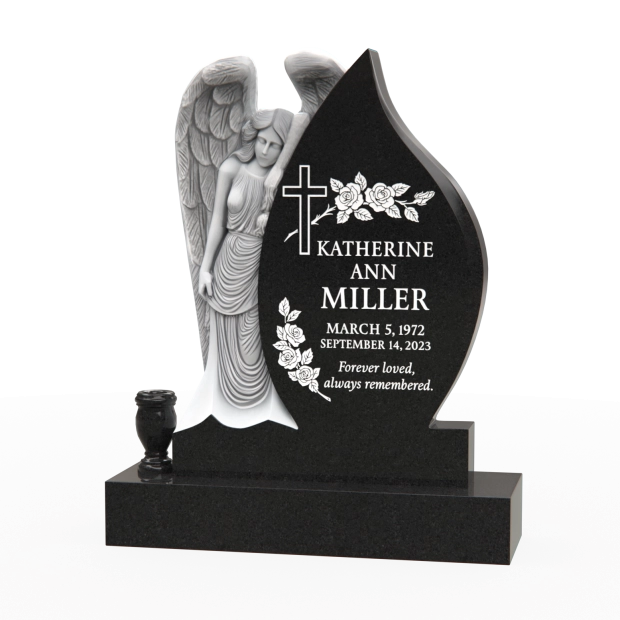
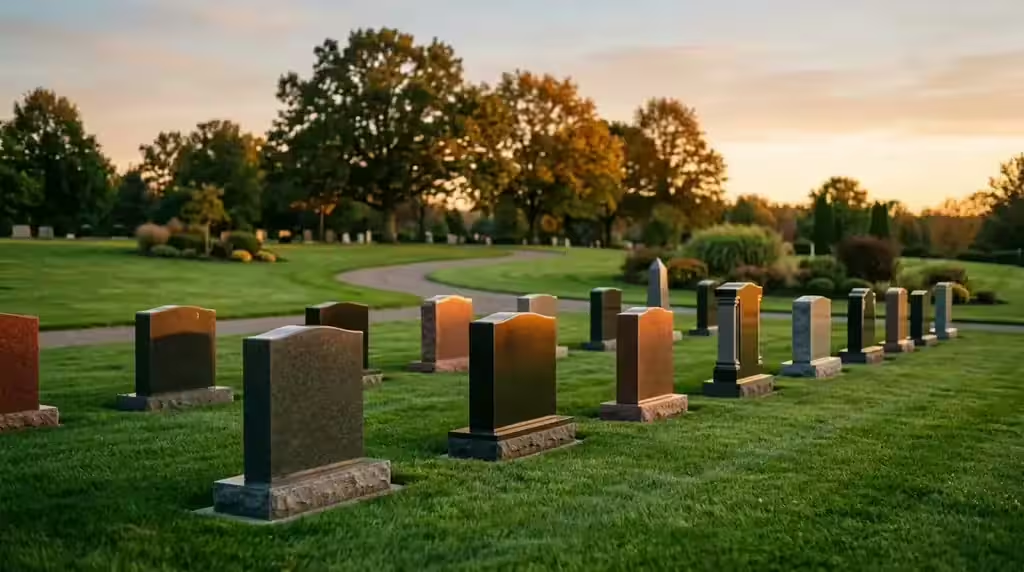
A headstone is an upright memorial, usually a granite tablet set on a base, that stands above the ground at the head of the grave. Because it is taller, it has more room for names, dates, epitaphs, symbols and portraits.
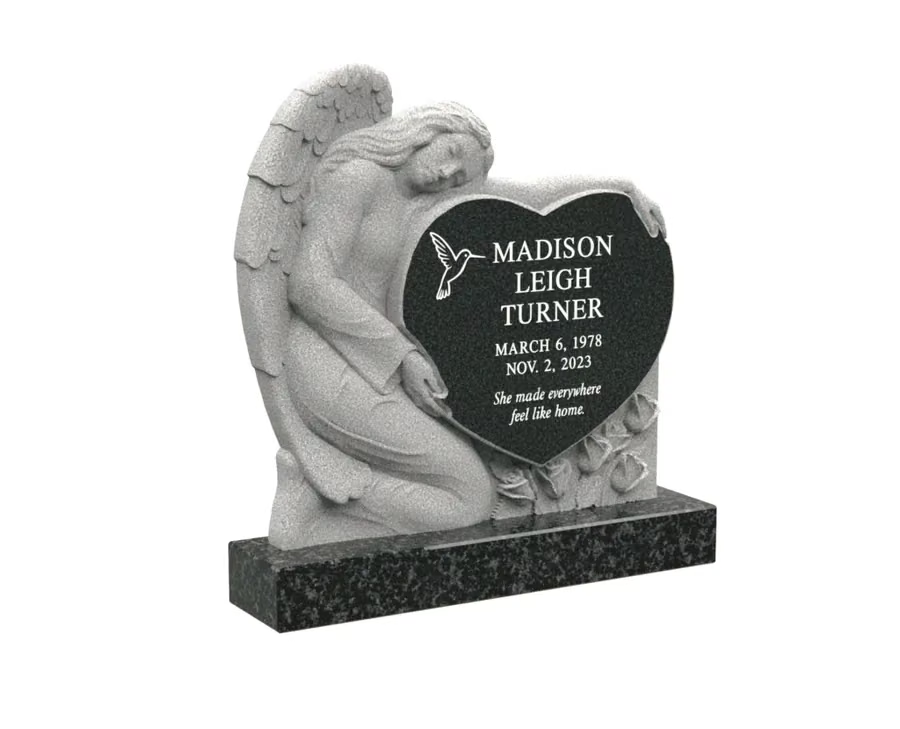
The VA’s upright granite and marble headstones measure 42 × 13 × 4 inches. They weigh approximately 230 pounds, nearly twice as much as the VA flat marker. Private upright headstones vary widely in shape: serpentine tops, hearts, crosses and sculpted forms. See our upright headstones.
How do grave markers and headstones compare side by side?
The main differences are profile, size, installation and cost. Listed prices below are from capitalgravemarkers.com as of October 10, 2026.
| Feature | Flat marker | Bevel marker | Upright headstone |
|---|---|---|---|
| Profile | Flush with the ground | Raised a few inches, angled face | Stands upright on a base |
| Sizes in our catalog | 16 × 8 in to 28 × 16 in | 20 × 10 × 4 in to 42 × 16 × 4 in | Many shapes and sizes |
| Listed price range | $198 – $1,570 | $505 – $2,727 | From $1,058 |
| Space for inscription | Name, dates, short epitaph | Name, dates, epitaph, symbol | Most space, including portraits |
| Cemetery acceptance | Accepted in most sections | Section rules vary | Only where upright monuments are allowed |
Which one costs less?
A flat grave marker usually costs less because it uses less granite and ships lighter. In our catalog the least expensive flat headstone is the Praying Hands flat marker at $198. Upright headstones begin with the Classic Serpentine Top Granite Headstone at $1,058.
Remember that the stone is only part of the total. Cemeteries can charge setting or permit fees, and installation is priced separately. For a full breakdown, read How Much Does a Grave Marker Cost in 2026?.
Does the cemetery decide which type I can use?
Yes. Each cemetery sets its own rules, and many lawn or memorial-park sections accept flat markers only. The Federal Trade Commission advises families to check “the type of monuments or memorials it allows” before buying a cemetery site.
The FTC also notes that its Funeral Rule does not apply to third-party monument dealers. It also does not apply to cemeteries without an on-site funeral home. So the cemetery’s written regulations are the document that controls. Our checklist in Cemetery Headstone Rules covers what to ask.
How do I choose between a marker and a headstone?
Start with the cemetery rules, then weigh space for the inscription and the total cost.
- Ask the cemetery which memorial types and maximum sizes are allowed in your section.
- Decide how much text, symbolism or photography you want on the stone.
- Choose single or companion — see our companion headstone guide.
- Compare listed prices, then add cemetery fees and any installation you need.
How do you choose granite grave markers for a family plot?
Granite grave markers identify a burial place with a name, dates and chosen words or art. Start with the rules for the grave, not with a photo alone. Capital Grave Markers lists flat, bevel, slant and upright options. Each product page shows the available size, color and price so you can compare a real design with the cemetery’s written limits.
A marker is part of a larger site plan. Check who owns the plot and who can approve the stone. Ask the cemetery for its allowed width, depth and height. Find out whether a base is needed and whether the cemetery must pour the foundation. Do not treat a sample size from another grave as approval for your own plot.
Next, plan the inscription. Write the full name exactly as the family wants it shown. Check each date against a record rather than memory. Leave room for a verse, symbol or later inscription if needed. A large stone with dense art can have less usable text space than a simple smaller design.
Compare the full written scope before paying. The catalog price, added text or artwork, delivery and installation are separate questions. Keep the final proof and the cemetery’s approval with the order records. Read the marker and headstone catalog for real options, and use the cemetery rules guide to prepare questions before choosing.
What is a granite grave marker and what does it identify?
A granite grave marker is a stone memorial used to identify a burial place and honor the person named on it. It can show names, dates, a short tribute and approved artwork. The phrase does not define one size or profile. Capital Grave Markers lists several forms, and the cemetery’s rules determine which choices can be used at a particular plot.
In everyday speech, marker and headstone can overlap. A family may call a low flat stone a marker and a vertical stone a headstone, but a cemetery may use its own terms. When asking for approval, provide dimensions and a drawing or product reference rather than relying only on the name of the type.
The marker also needs an inscription plan. Decide which facts identify the person clearly and which personal details matter to the family. Check names and dates against records. If the stone will be shared, plan the layout for both people before filling the space with a long verse or large image.
Choosing the stone is only one part of the order. Cemetery approval, proof approval, delivery and installation remain separate steps. The product collection shows real options and prices, while the cemetery requirements guide explains what to ask before buying. Keep the final written scope so the selected marker, intended inscription and services are documented together rather than inferred from a general description or sample image.
What is the difference between upright and flat headstones when ordering?
The main difference between upright and flat headstones is their profile: an upright provides a vertical face, while a flat marker has a low face viewed from above. That changes the layout and site requirements, but neither form is automatically right for every grave. Check the cemetery’s rules and the actual product dimensions before comparing price, art or inscription space.
An upright can include a separate tablet and base, so ask which dimensions apply to each piece. A flat marker may still require a foundation or an approved setting method. Do not assume that a lower profile means no installation work. The cemetery can confirm the permitted form and responsibilities for the particular plot.
Compare the usable inscription area rather than height alone. A vertical stone with heavy carving may offer less plain text space than its outline suggests. A flat stone may need a shorter verse to keep names readable. Bring the real inscription to the design discussion so the proof addresses the family’s wording instead of a generic sample.
Use the upright collection and flat collection to compare listed options. Save the size, color and SKU for each shortlisted design. Ask for an itemized quote that includes the selected additions and confirms separate delivery or installation terms. The best comparison uses two cemetery-approved options with clearly described scopes, not two photographs that happen to have different starting prices.
Add Capital Grave Markers as a Preferred Source on Google
Sources
- U.S. Department of Veterans Affairs — Headstones and Markers: Types
- Federal Trade Commission — Buying a Cemetery Site
- Federal Trade Commission — The FTC Funeral Rule
Prices quoted are listed prices on capitalgravemarkers.com as of October 2, 2026 and may change. The product page, written quote and signed agreement control your order.
Shop Related Memorials
Have a Question?
Our team is here to help with any questions about your order, delivery, or installation.