

The Orthodox Year at the Grave: A Calendar of Memory

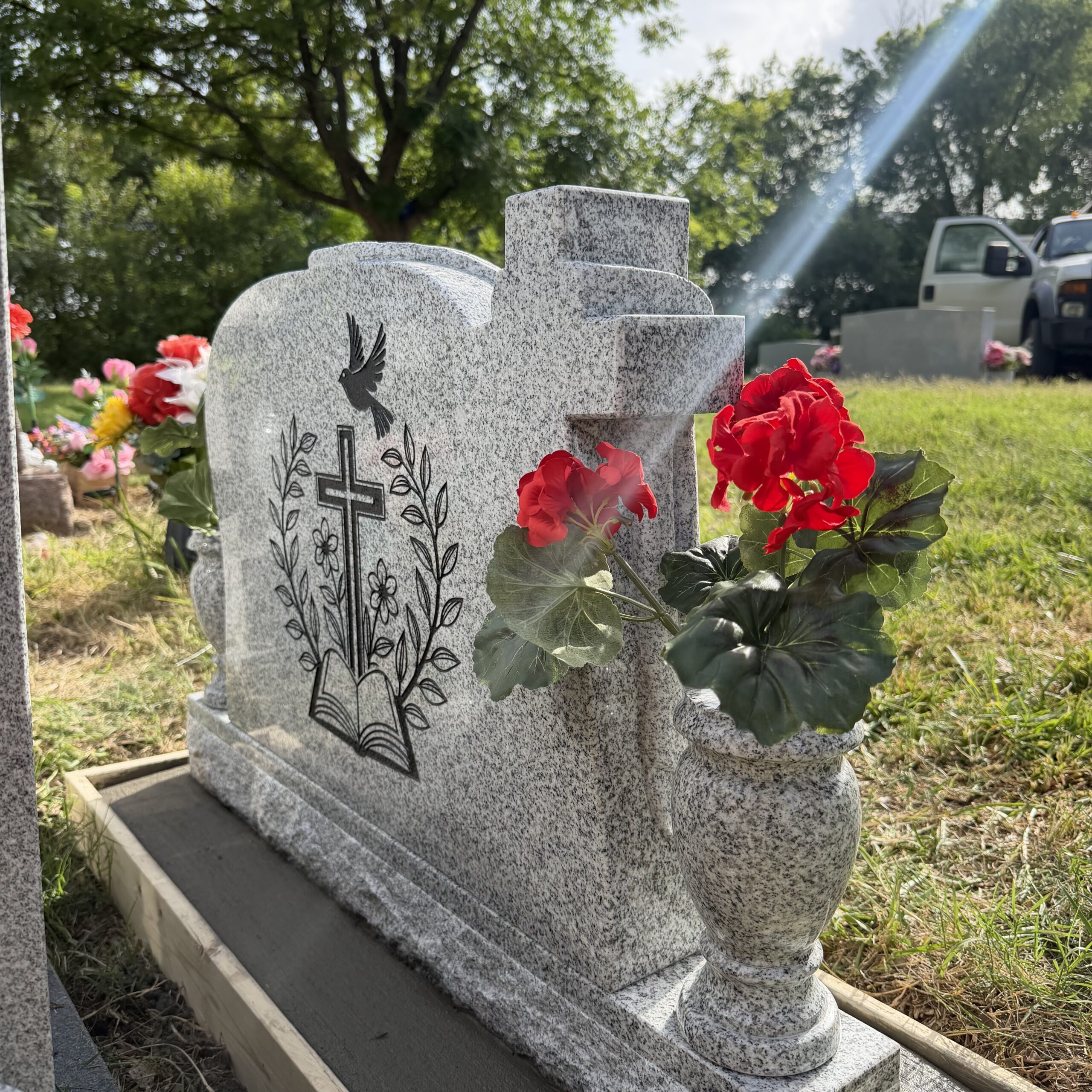
The majority of American practices of commemoration are tied to the civil calendar: the birthday remembrance, the wreath laid in December. Orthodox Christians commemorate their dead using a different and ancient calendar, which takes the grave on a liturgical journey throughout the year, and to understand the Orthodox cemetery, one must learn to read it according to this liturgical calendar, which never rests until Pascha. In this article we are going to trace this calendar during a full year – Soul Saturdays, radiant Tuesday, the incense and the wheat – stopping by each date to look at what happens on graves and what this demands of the stones standing by them. For Orthodox clients of our workshop – Greek, Russian, Ukrainian, Serbian, Romanian, Antiochian, and other – all of this is obvious. For the rest of people, welcome to the most rhythmic remembering in Christendom.
Soul Saturdays: the late winter assembly of names. The year’s cycle of memory starts before Great Lent, with Soul Saturdays – several Saturdays grouped together in the late winter when the Church invokes the names of all deceased. Names are submitted to the Church in lists – for many generations, for all members of the family to be mentioned by name in the prayers – and koliva, the memorial dish of boiled wheat sweetened with honey and fruit, is prepared: wheat, because “unless a grain of wheat falls into the earth and dies, it remains alone; but if it dies, it bears much fruit.” The koliva is blessed, shared, and usually brought to the cemetery where the graves get the visit in the late winter. The stone’s role on those Saturdays is the most basic and essential one of the Orthodox stone: it must bear names, written right – for many families it means two alphabets: Cyrillic or Greek beside the English, in one composition. Our policy for these inscriptions is the same as for every non-Latin alphabet: native reader’s approval letter by letter, with the complete inscription previewed in its final form for the family to approve at true size in the free 3D preview. The tradition that remembers its dead by name, out loud, every year, deserves stones that write them right.
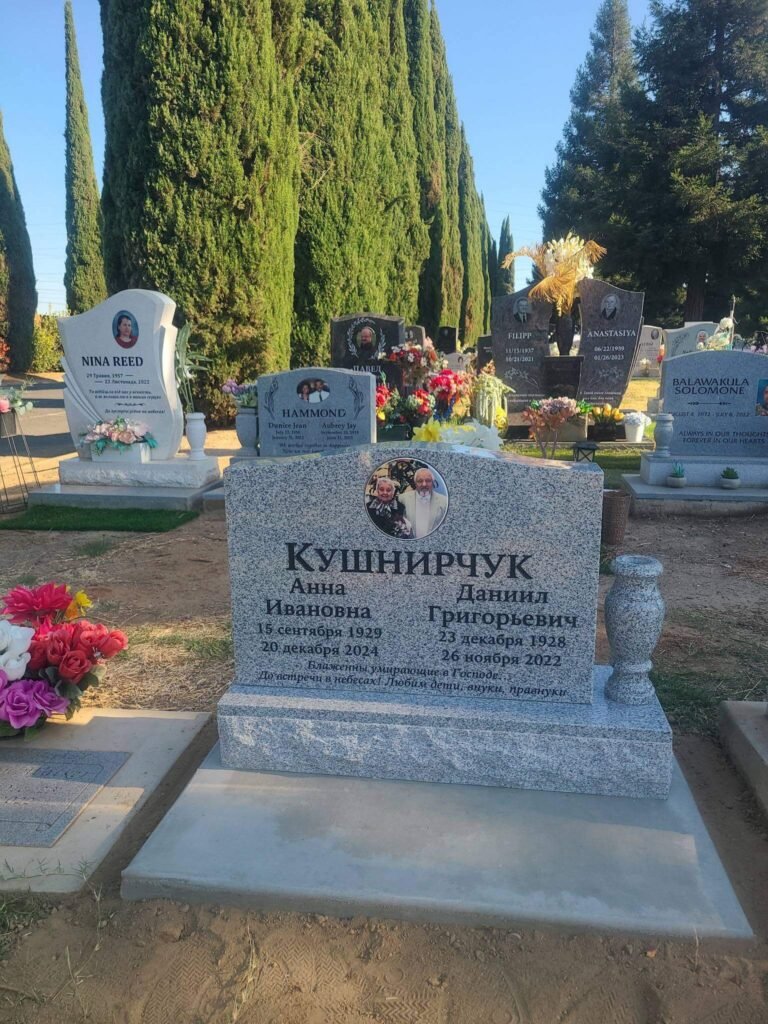
Pascha and Radonitsa: the brightest week of the cemetery. After that – the high point of the year – the Orthodox Easter and, two Tuesdays later – the most distinctive grave visit day of the tradition: Radonitsa, “the day of rejoicing.” The name is not a euphemism. At Radonitsa families bring the Easter greetings to their dead: they come to the graves bringing red-dyed eggs, kulich, and other Pascha foods, singing the troparion “Christ is risen from the dead” and greeting the deceased with the same words the living exchange all that week – Christ is risen! – because the whole logic of the celebration is that the news applies to the cemetery most of all. Graves are cleaned and decorated for the celebration; in the motherlands entire villages gathered in the churchyard for the day, and in American parishes the custom thrives where the community exists. The monument’s role on Radonitsa is to deserve the good news: to be cleaned and shine bright (this is why polishing of granite gets its money worth again), often having the most important symbol of the tradition, of which we are going to talk in detail further below, and to stand in the midst of eggshells and songs as the least mournful of stones in the American funeral practice. Some families apologize to us for “celebration” of the graveside memorial. We tell them the truth: their tradition has the oldest permission slip in the world.
The symbol at the center: the three-bar cross. Each season of this calendar passes under the same sign, so the year’s tour stops by now. The Orthodox cross is three-barred one: small upper bar for the inscription placed there by Pilate, great central bar for the arms of the cross, and the slanted lower bar – the footrest, its inclination explained by tradition as the scales of the two thieves, one end rising toward paradise. On Russian and Ukrainian family stones especially, the three-bar cross is the crowning of the monument; Greek families prefer the equal-armed or budded cross; both belong to the visual language in which proportion is meaning. Our workshop cuts these crosses according to their canons – the bar ratios and the slanting are not a matter of decoration, and we treat them accordingly – along with the rest of the tradition’s symbols: the Chi-Rho, the IC XC NIKA, the geometry of icons in the etching lines – as many families request – always shown in full size in the design preview for the family’s, and where it is requested – the priest’s review before production.
The year’s personal anniversaries: third, ninth, fortieth, and the yearly panikhida. Intertwined with the fixed calendar, goes the cycle of the individual soul’s anniversaries: the memorial services – panikhida, with the incense, candles, and “Memory eternal” being sung – which are supposed to be done on the third, ninth, and fortieth days after the death and thereafter on the anniversary of every year. The fortieth day is especially significant for the Orthodox tradition, and it influences the planning of monuments in a way our workshop understands very well: many families plan the placing or blessing of the stone either on the fortieth day or the first anniversary of the death, when the priest is serving at the graveside and blessing the completed monument. Our workshop takes these dates as real deadlines – design, native review, production and delivery are paced backwards from the panikhida that is planned – because being late to the fortieth day is not a shipping delay; it is a failure of reverence, and we schedule like we understand it.
Quiet seasons: incense, oil lamps, and the long green summer. Between the great dates the tradition celebrates its ordinary practices: the graveside visit after the Sunday Liturgy, candles, and, where the cemetery rules allow it, the small oil lamp or lantern – the design element that we incorporate into granite if the family asks for it and the cemetery’s policy allows it, confirmed by our office in advance, since the flame rules differ greatly between cemeteries. Summer is the season of slow tending – the time when the stone stands and works the most – and the notes of practicalities of the tradition accumulate here: Orthodox families prefer upright stones of strong proportion where possible; granite in grey and black colors, which contrast well with Cyrillic and Greek lettering; deep characters for the readability of the century; and increasingly often the companion and family stones, names accumulating with generations in the parish. The engraving is included within every price, shipping is free of charge, and 0% installment plans with pre-need arrangements are available for the planners – and this tradition, with its long memory, produces them often.
The calendar closes – which means it opens. By late autumn the Soul Saturdays are already visible ahead, and the year’s journey ends at the same place where liturgical years always end: at the beginning. The circularity is the main lesson of the tradition about memory: the deceased are not left behind on the timeline; they are met again and again on the cycle of days assigned, are greeted, sung to, fed with wheat and honey, are told the news every spring. The monument created for this calendar is created for meetings: the right cross at its top, both alphabets right, the shine that deserves the cleaning, granite that will hold “Memory eternal” for a hundred years of Radonitsas. Memory eternal – vichnaya pamyat – is the main prayer of the tradition and its design concept in two words, and we accept this concept willingly, year after year.
