

The Bench Headstone Teardown: An Engineer’s Perspective on the Only Monument You Can Sit On

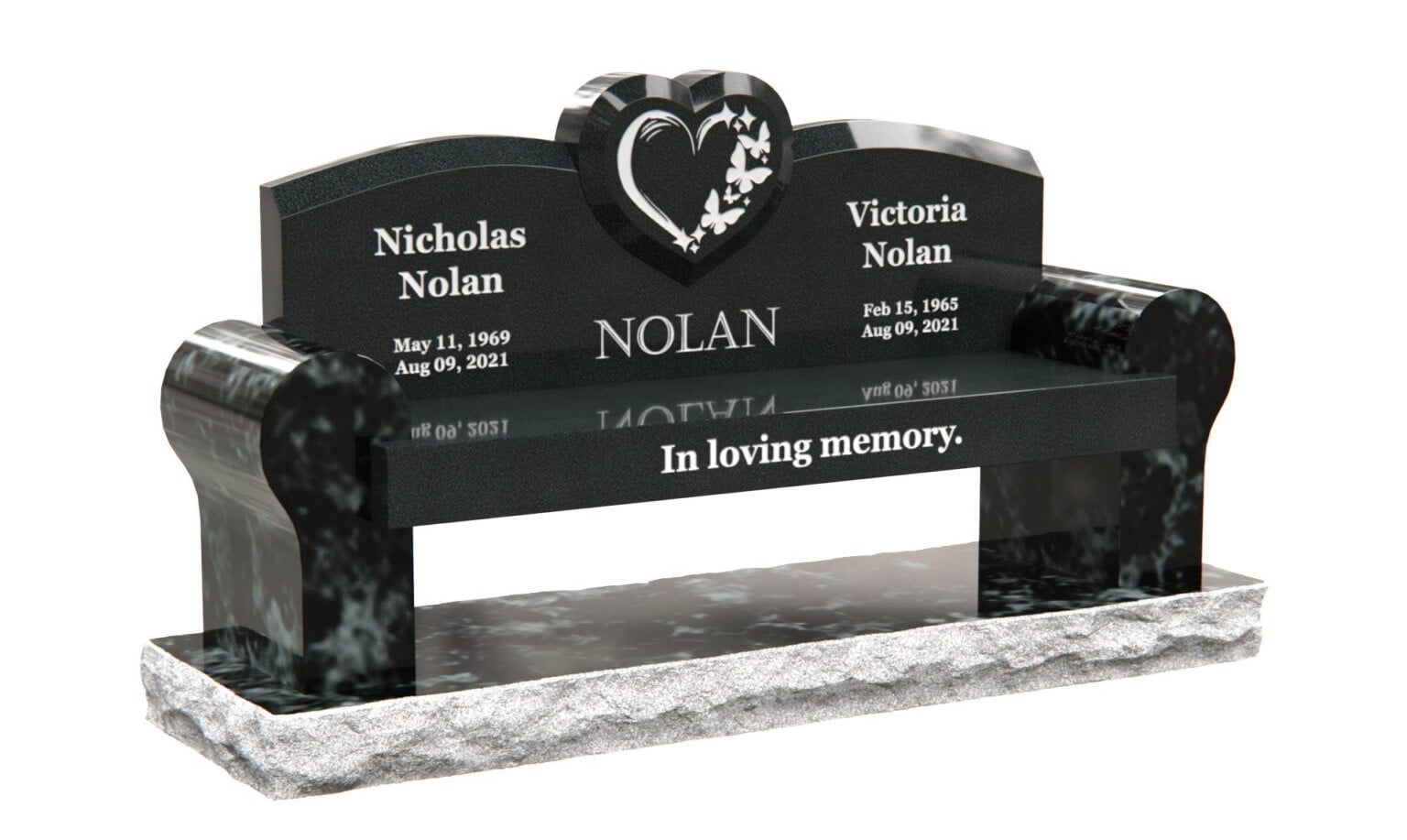
When engineers want to give a compliment, they perform a teardown: take the thing apart, piece by piece, and let its design speak. In this teardown, I’m going over the most structurally interesting object among memorials – bench headstones, the granite memorial benches that are furniture and monument in one, acting both as seating rated for dozens of years of use, and as a monument with a family’s inscription on it. Everything else in the cemetery just stands there – and the memorial bench does considerably more than that. How does it do it? Component by component.
Component one: the seat slab. The core of the structure – a beam of granite, usually at least four feet wide, spanning from support to support. The engineering problem here is deflection and fracture under live loads, and granite solves it almost comically easily: a properly sized seat slab at standard thickness easily withstands live loads with safety factors that could make a bridge jealous. People aren’t the design problem here – point impacts and bad span-to-thickness ratios are. If you design it improperly, you will concentrate stresses where granite is very brittle. Teardown verdict: slab thickness and span ratio are the first two numbers you need to check when you purchase a memorial bench – and exactly the reason why our designs are structurally dimensioned, not drawn as furniture.
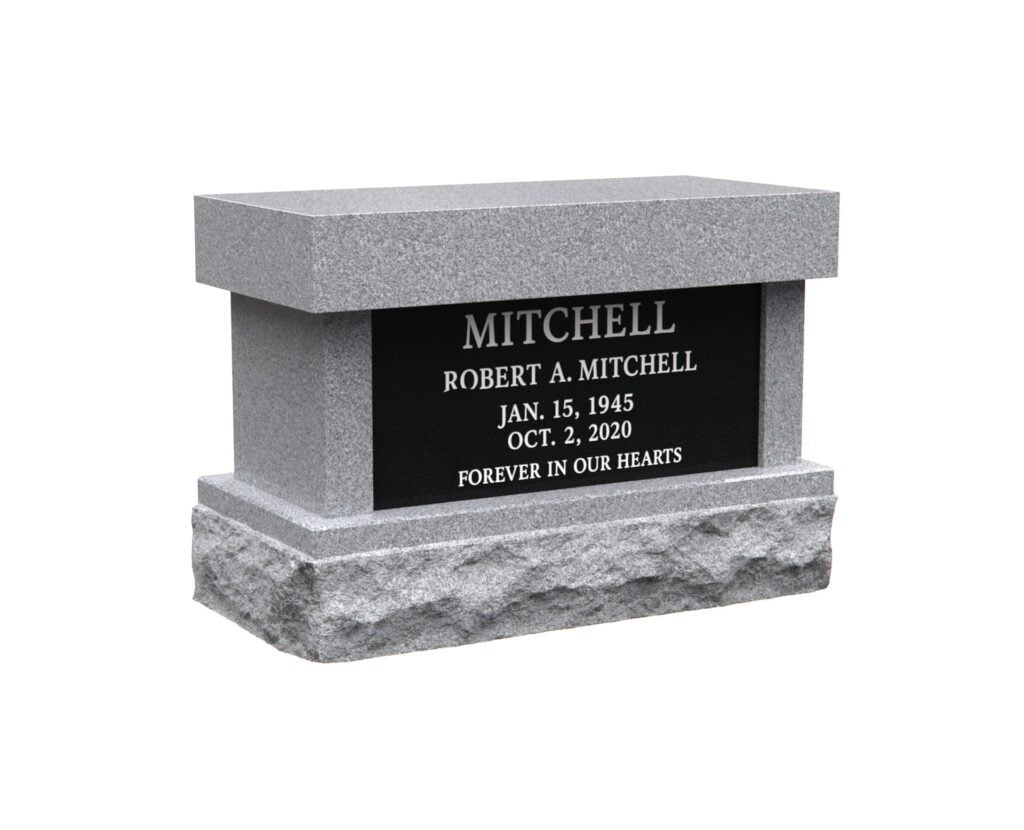
Component two: the supports. Pedestals, made of the same granite as the slab, that quietly do their foundation job. What they do for us: transfer loads from the seat slab to the base, resist racking (a sideways swing of an improper assembly due to its looseness) and act as inscription surfaces for those designs that use them. The focus of my teardown lies on the connections between the slab, the supports and the base: pinned and epoxied connections join three stones into one structure. Dry-stacked memorial benches – and they do exist in the cheap segment of the market – are just three stones that pretend to be one structure, and frost gets to them after the second winter. You should find out how these joints are made, and the answer must involve steel pins and adhesive.
Component three: the base and the ground problem. All of the above is supported by the base – a granite or concrete slab, which should be wider than the bench’s own footprint to spread loads on the soil that expands, shrinks and moves according to seasons. The engineering problem is exactly the same for any monument – but with increased stakes because of the geometry: a leaning headstone is a sorrow; a leaning bench is a sorrow that stops working. Site preparation, including excavation and compaction, and drainage – all that is installation work, and I have to be honest about the scope of our work: we design and manufacture a bench and the base as a matched system, and we help each family get in touch with a local installer, since the installation is not covered by our price. The specification sheet that we provide is written in such a way that any competent monument installer can execute it without modifications – which is the exact purpose of any good teardown.
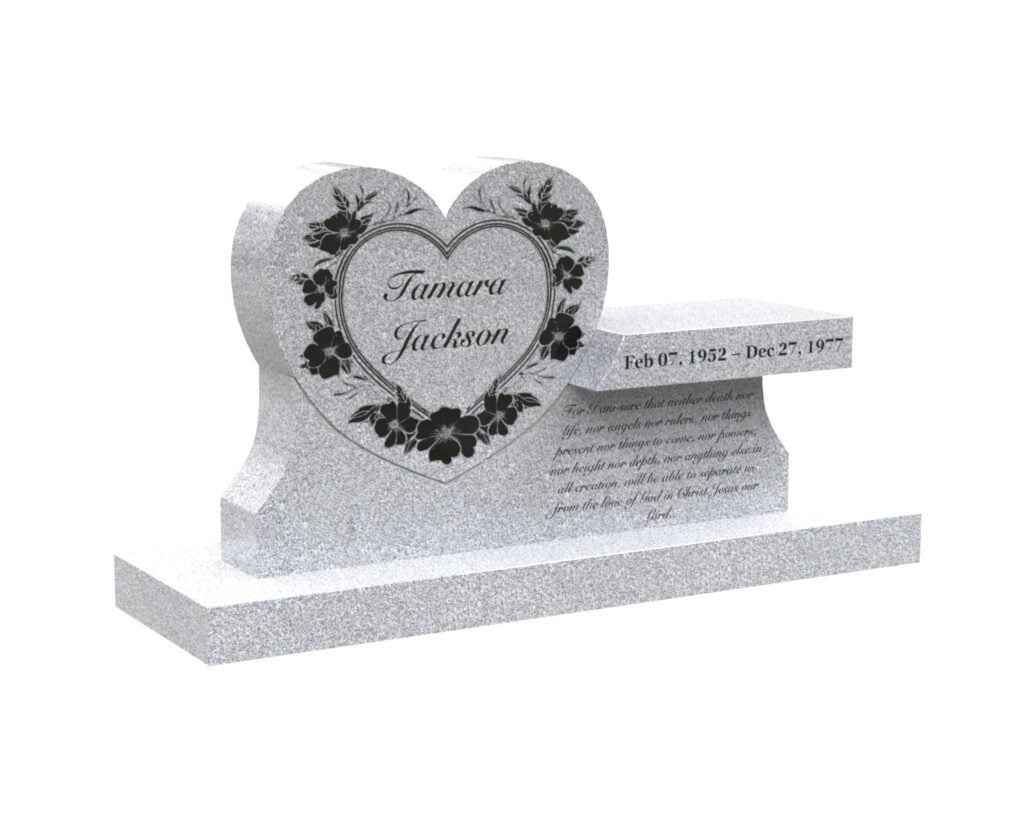
Component four: the inscription surfaces. Trivial from the structural point of view, but the whole purpose of the monument – and our design gift to the engraver is an abundance of surfaces for inscription at the human scale: the backrest (in the case of the backed models) provides inscription surfaces at the height of the seated eye, the front of the seat and supports are the secondary surfaces, and the horizontal seat provides inscription surfaces as well, to be read from above. Note from the teardown bench: inscription on the seating surface should be made close to the backrest or ends of the seat to keep it away from the wear – granite inscription is able to stay crisp under dozens of years of using the bench, but you still should respect the object’s function while composing. The engraving of all surfaces is included in the bench price, and our free 3D preview of the monument shows it as a whole with lettering in place, ready for revision until the final approval of the family.
Component five: the cremation chamber option. The most elegant subsystem of our monument: the model of the memorial bench with a sealed chamber inside the seat or pedestal, which turns the bench itself not into the marker near the grave, but into the grave itself. Engineering considerations: the design of the access to the chamber (either a front or top plate, gasketed and fixed), capacity for single or companion urns and cemetery requirements for the above-ground interment, which vary and are checked in advance with your cemetery office directly – the regulatory sub-system that no one should ever machine by themselves. For the majority of people who choose cremation, this configuration solves the whole problem in one object: monument, resting place, and the seating place for visiting it.
Component six: the surface finishes as the weather system. The polish on the seat and inscription surfaces is not cosmetic in the monument designed this way – it is the drainage and cleaning system that sheds water, pollen and biological growth with a rain or a wipe. The rock-pitched or honed finishes should be used on the vertical and bottom surfaces where they are needed. Note for the freeze climate zones: the seat slab should shed the water by design (with slight crown or fall), since the combination of ponded water and frost is the only weather combination that outplays granite in the long run. Our designs crown the seats of the benches. Most brochures don’t mention this feature. Now you know.
The teardown summary sheet. What makes the century bench different from the brochure bench, in the order an engineer checks: proper slab thickness proportional to the span; pinned and epoxied connections throughout; base wider than the footprint on the specified foundation; seat drainage by design; inscription surfaces for reading and wear; chamber sealing for the cases of interment; and cemetery specifications checked in advance. What the buyer adds to the list: our free 3D design preview with revision included; engraving included in the price; free shipping to the lower 48 states; our installer-connection assistance for the site work; and zero-percent financing plans up to 12 months and longer with additional terms – because the monument that is engineered to last a hundred years of use shouldn’t be rushed and strained by one year’s budgeting.

Engineer’s concluding note. Teardowns end with the verdict, and this one is clear: the bench headstone is the best structural value among the monuments – the only monument that pays its visitors back with rest each time they come. Design it as a structure, finish it as furniture, inscribe it as the family document, and it will survive any patio set, most of the fences, and, if my calculations hold, the whole century. Sit down. That is exactly what it was meant for.
