
Most Affordable Materials for Grave Markers

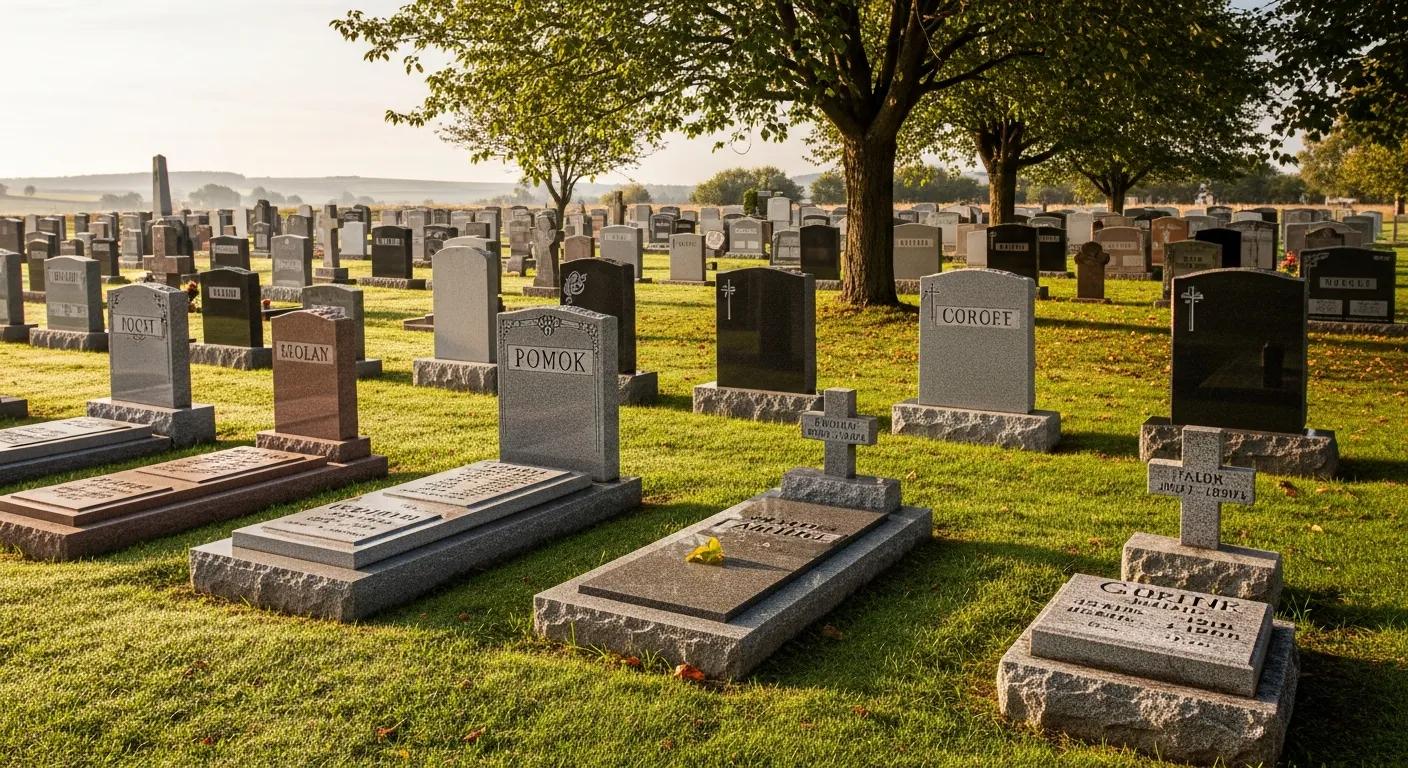
Materials for Cheap Grave Markers
Choosing an affordable, dignified grave marker is both a practical and emotional decision. This guide lays out the most cost-effective materials and marker styles so you can select a memorial that honors a loved one without overspending. We compare trade-offs — from granite to concrete and sandstone — review flat, bevel, slant and upright designs, and explain how size, engraving, installation and cemetery rules influence total cost. You’ll also find maintenance tips, quick comparison tables for side-by-side decisions, and clear ideas for keeping within a budget while protecting long-term value. Finally, we highlight vendor and financing options that can lower upfront expense without limiting customization.
Table of Contents
- What Are the Most Affordable Materials for Grave Markers?
- Which Types of Grave Markers Offer the Best Affordability?
- How Do Material Choices Affect the Longevity and Maintenance of Affordable Grave Markers?
- What Factors Influence the Overall Cost of Affordable Grave Markers?
- How Do Cemetery Regulations Affect Material and Style Choices for Affordable Grave Markers?
- Conclusion
What Are the Most Affordable Materials for Grave Markers?
Affordable materials balance a low upfront price with acceptable durability and simple upkeep. Common choices are granite, concrete, and sandstone — each with different cost‑to‑lifespan trade-offs. Granite generally gives the best longevity for a reasonable price. Concrete and sandstone have lower starting costs but need more care over time. Bronze is long‑lasting and decorative but usually costs more up front, while marble looks attractive yet weathers faster, which can raise long‑term expense. The table below offers a compact comparison to help you weigh durability, price, and practical uses before deciding.
This table compares typical materials for budget-conscious memorial planning.
| Material | Durability | Typical Price Range | Maintenance | Best Use Case |
|---|---|---|---|---|
| Granite | High — decades to centuries | Low–mid to mid-range depending on type and quality | Occasional cleaning; reseal polished finishes as needed | Flat markers, upright headstones, long-term memorials |
| Concrete | Low–moderate — decades with care | Lowest upfront cost | Regular sealing; may crack in freeze-thaw climates | Short-to-mid-term markers, temporary or budget plots |
| Sandstone | Low — weathers over time | Low cost | Gentle cleaning; prone to erosion and delamination | Rustic or historic settings where short-term affordability is the priority |
Overall, granite often represents the best long-term value even if its initial cost is higher; concrete and sandstone are suitable when immediate affordability or a shorter service life is the priority. The sections that follow explain why granite frequently provides the most durable “budget” headstone and when concrete or sandstone may fit a family’s needs.
Why Is Granite Considered the Best Value for Durable Cheap Headstones?
Granite is often the best value because it pairs modest upfront cost with exceptional hardness and weather resistance, lowering total lifecycle expense. Its crystalline structure resists scratches, erosion and biological staining, so engraved text and etching stay legible for decades with minimal upkeep. More common granite shades — gray or salt‑and‑pepper finishes — are usually less expensive than rarer blacks or reds, making durable options accessible for budget-conscious buyers. Knowing how color and finish affect price helps families pick a practical look that reduces long‑term repair or replacement needs.
Granite’s durability and range of finishes lead naturally to more budget-focused alternatives, which we cover next.
How Do Concrete and Sandstone Serve as Budget-Friendly Memorial Options?
Concrete and sandstone meet budget needs by offering the lowest upfront prices and straightforward fabrication, but they trade off longevity and fine-detail engraving for economy. Concrete can be cast into flat or bevel shapes quickly and cheaply, though it’s vulnerable to freeze‑thaw damage and surface scaling unless sealed regularly. Sandstone provides a warm, natural look that can suit historic settings but erodes faster, softening fine lettering over time and increasing the chance of restoration. For families prioritizing immediate affordability over multi‑decade permanence, concrete or sandstone are practical choices with clear maintenance expectations.
These options underline the importance of matching expected lifespan to your memorial goals; next we’ll look at which marker types save the most money.
Which Types of Grave Markers Offer the Best Affordability?
Marker type affects cost through material quantity and installation complexity. Flat markers, bevels and slants usually cost less than full uprights or companion stones. Flat markers use less stone and simpler foundations, lowering both material and labor bills. Bevel and slant markers add presence at modest additional cost. Upright headstones and companion memorials use more material and need larger bases and anchoring, making them more expensive. The table below summarizes marker types, material compatibility, typical cost ranges and installation complexity to show where you can save without sacrificing dignity.
An at-a-glance comparison of marker types helps families balance visibility, permanence and budget.
| Marker Type | Material Compatibility | Typical Cost Range | Installation Complexity |
|---|---|---|---|
| Flat (flush) | Granite, bronze plaques | Lowest to low | Simple foundation; minimal labor |
| Bevel | Granite, concrete | Low to mid | Slightly larger base; moderate labor |
| Slant | Granite | Low to mid | Moderate foundation; improved visibility |
| Upright headstone | Granite, marble | Mid to high | Substantial base and anchoring; higher labor |
| Companion memorial | Granite, bronze | Mid to high | Larger size; permits and more installation work |
This table shows flat markers offer the most consistent savings, while uprights and companion stones add cost for size and complexity. Below are concise reasons flat, bevel and slant markers often make sense for families on a budget.
- Flat markers use less stone and need simpler installation than uprights, lowering material and labor costs.
- Bevel and slant markers increase visibility while keeping material and installation increases modest.
- Uprights and companion markers justify higher costs when greater visibility or shared memorials require larger stone and foundations.
These distinctions help families prioritize savings before weighing longevity and maintenance trade-offs in the next section.
Why Are Flat Grave Markers the Most Economical Cemetery Markers?
Flat markers are typically the most economical because they minimize stone volume and simplify installation, cutting both material and labor costs. Their flush design usually sits on a small concrete footing rather than a full granite base, lowering foundation expenses and often matching cemetery preferences for easy mowing. Fabrication requires less cutting and polishing, which reduces shop labor time and speeds completion. When comparing flat versus upright headstones, the flat option commonly costs noticeably less in both materials and installation.
Recognizing the savings from flat markers naturally leads many families to consider slightly more visible — yet still affordable — bevel or slant options.
What Are the Benefits of Bevel and Slant Markers for Budget-Conscious Families?
Bevel and slant markers strike a balance between cost and legibility. They offer a larger visible face than flats without the full expense of an upright headstone. These styles require only a slightly larger foundation than a flat marker, keeping installation fees controlled. Simple design choices — narrow borders, a single font and limited artwork — create a dignified look at lower cost. For many families, a bevel or slant marker delivers better presence while avoiding the significant price jump of full uprights.
After you pick a marker type and material, the next important consideration is how materials affect maintenance and lifetime cost.
How Do Material Choices Affect the Longevity and Maintenance of Affordable Grave Markers?
The material you choose sets expected lifespan, routine upkeep and total cost of ownership. Granite and bronze typically last longest with limited maintenance; concrete and sandstone need more frequent attention. Granite resists biological growth and weathering, so a gentle wash now and then and occasional resealing keep a marker readable for decades. Bronze develops a patina many families appreciate; care differs from stone and sometimes involves mild cleaners or waxing to preserve raised lettering. Knowing the expected maintenance tasks and frequency helps translate upfront savings into a realistic long-term budget.
What Maintenance Is Required for Granite and Bronze Markers?
Granite care is simple: periodic gentle cleaning with a non‑abrasive detergent and soft brush preserves polished finishes. Resealing every few years can help in harsher climates. Bronze follows a different routine: its natural patina develops over time, and families can choose either to preserve that look or to apply mild cleaners and wax to keep highlights on raised letters. Both materials may benefit from occasional professional restoration for deep cleaning or re‑lettering, which extends usable life. Sticking to a basic maintenance schedule lowers the true long‑term cost and keeps memorials looking respectful.
Are Low-Cost Materials Like Concrete Durable Enough for Long-Term Memorials?
Concrete and other low-cost materials can last for decades in favorable conditions but are more exposed to environmental damage like freeze‑thaw cycles, chemical stains and surface scaling. Reinforcing and sealing concrete can extend its life, but those steps add cost and complicate the “cheap” calculation; plain concrete without reinforcement may crack or spall over time. In climates with frequent moisture and temperature swings, factor likely restoration or replacement into long‑term plans. When longevity matters, investing in granite often reduces total lifecycle cost despite higher upfront expense.
What Factors Influence the Overall Cost of Affordable Grave Markers?
Several non‑material cost drivers—size, design detail, engraving and personalization, shipping, installation and cemetery fees—combine to determine the final price and can add substantially to the stone’s base cost. Size scales price almost linearly: larger stones use more material and heavier equipment. Design complexity, such as custom artwork or deep carving, increases shop hours and cost. Special finishes or inset ceramic photos carry per‑item fees. Shipping and installation depend on distance, cemetery access and permits; some cemeteries add placement or foundation fees that should be included in your budget.
The table below breaks down common cost drivers and their typical impact so you can see what choices move the needle most.
| Cost Driver | Example Attribute | Typical Impact on Price |
|---|---|---|
| Size | Small flat vs large upright | Low to high (material and labor scale) |
| Design complexity | Custom artwork, deep carving | Moderate to high (shop hours increase) |
| Engraving/personalization | Etched portrait, ceramic photo | Adds fixed per-art or per-photo fees |
| Shipping & installation | Remote cemetery access | Variable; can be a significant percentage of cost |
| Cemetery fees | Permit, foundation rules | Fixed or per-placement charges that increase final cost |
This breakdown clarifies trade-offs and helps you ask targeted questions when comparing quotes. Here are primary levers families can use to control total cost:
- Choose a smaller marker footprint to reduce material and installation costs.
- Limit custom artwork or use template engraving to avoid shop-hour surcharges.
- Confirm cemetery placement and permit fees before ordering to prevent surprise charges.
With cost drivers identified, vendor options and financing can help manage the upfront burden. The next section explains how Capital Grave Markers structures pricing and support to help families stay within budget.
How Do Cemetery Regulations Affect Material and Style Choices for Affordable Grave Markers?
Cemetery rules often dictate acceptable materials, marker dimensions and foundation specs, and those regulations directly shape which affordable options will work for a given plot. Many cemeteries enforce flush‑only areas or limit upright sizes to maintain consistent groundskeeping and appearance, which steers families toward flat granite markers that are both affordable and usually compliant. Some sites restrict softer stones or certain finishes where preservation is a concern, so confirming rules early prevents ordering a non‑compliant memorial. Knowing common cemetery requirements up front helps you pick the most affordable compliant marker and avoid costly rework.
What Are Common Cemetery Rules Regarding Grave Marker Materials?
Common rules include flush‑only sections, maximum upright dimensions, minimum base or footing specifications, and approved materials lists that may exclude softer or highly weatherable stones. Flush‑only areas favor flat granite or bronze plaques because they sit level with the ground and simplify maintenance. Size and foundation requirements can add concrete or reinforced footings that increase installation costs, so get plot dimensions before design. Knowing these constraints lets families choose budget-friendly, compliant options without unnecessary customization.
How Can Families Choose Affordable Markers That Meet Cemetery Requirements?
Start by requesting the cemetery’s written rules and a plot measurement. Then pick a marker type and material that are commonly accepted — flat granite is often the easiest choice for both affordability and compliance. Confirm foundation and permit requirements with cemetery staff so installation quotes are accurate, and choose simpler engraving templates to control shop hours. Coordinate early with your monument provider and the cemetery and consider scheduling installation during lower-demand times to potentially reduce fees. This step‑by‑step approach minimizes surprises, ensures compliance and keeps the project within a predictable budget.
With cemetery rules and vendor coordination in place, families can also evaluate financing and vendor guarantees to manage upfront cost — topics we cover next about choosing a trusted provider.
Frequently Asked Questions
What should I consider when choosing a grave marker material?
Think about durability, maintenance and cost. Granite offers long life and low upkeep, making it a common pick. Concrete and sandstone are cheaper initially but generally need more care over time. Also consider the look you want and how the material will hold up in your local weather. Balancing these factors will help you select a marker that fits both your budget and long-term needs.
How can I personalize an affordable grave marker without overspending?
You can personalize on a budget by choosing simple designs and limited engraving. Pick a clean, readable font and minimal artwork to keep costs down. Many vendors provide templates that allow meaningful personalization without high design fees. Use a free 3D preview, if available, to check the layout before production so you can make changes that won’t add unexpected costs.
Are there financing options available for purchasing grave markers?
Yes. Many providers, including Capital Grave Markers, offer financing to help families manage costs — from in‑house payment plans to discounts for full payment and special offers for veterans. Financing lets you spread the cost over time and can be a good alternative to high‑interest loans. Ask your vendor about available plans and terms to find the best fit.
What are the typical installation costs associated with grave markers?
Installation costs vary by marker type, size and site conditions. Flat markers usually cost less to install because they need simpler footings; uprights often require larger bases and more labor. Cemeteries may also charge placement or permit fees. Be sure to include installation and any cemetery charges when planning your budget.
How do cemetery regulations impact my choice of grave marker?
Cemetery rules can shape material, size and installation choices. Some sections are flush‑only, others limit upright height or require specific foundations. Getting the cemetery’s written requirements early ensures you pick a compliant marker and avoid redesigns or extra costs.
What maintenance should I expect for different types of grave markers?
Maintenance depends on material. Granite generally needs only occasional cleaning and periodic resealing. Concrete may require regular sealing to prevent cracking, and sandstone needs gentle cleaning to avoid erosion. Bronze develops a patina that many families appreciate but can be polished if you prefer a brighter finish. Understanding care needs helps you plan for long‑term upkeep.
Can I choose a grave marker that fits my budget and still looks dignified?
Yes. Many affordable options look dignified. Flat markers are economical and respectful in appearance; bevel and slant markers give more visibility without the cost of full uprights. With simpler designs and sensible material choices — particularly granite or reinforced concrete — you can create a meaningful, affordable tribute. Prioritize the elements that matter most to you to get the best value.
Conclusion
Picking an affordable grave marker lets families honor a loved one with dignity while keeping costs manageable. Understanding the strengths and trade‑offs of materials like granite, concrete and sandstone makes it easier to balance longevity and budget. Explore our range of budget‑minded options to find the memorial that fits your needs, and visit our website to see how we can help you create a thoughtful, lasting tribute.


 0% Instalment Plans - Up to 12M - Call For Details!
  Free shipping