

Memorials by Burial Type

Memorials by Burial Type — A Practical Guide to Choosing Grave Markers and Headstones
Memorials
are lasting places of memory — spots where family and friends can reflect, remember, and celebrate a life. This guide walks through common burial types and the memorial options that pair best with each one. Knowing the differences helps you choose a marker that honors a person’s story and fits cultural, practical, and cemetery considerations. We’ll cover the main burial methods, suitable marker styles, recommended materials, personalization choices, and special options for cremation and natural burials.
Main Burial Types and How They Affect Memorial Choices
The burial method you choose usually shapes the kind of memorial that works best. The most common approaches are in-ground burial, above-ground entombment, cremation, and green or natural burial. Each has practical needs and aesthetic possibilities — understanding them makes planning easier and more meaningful.
Above-ground memorials, in particular, create a visible and lasting focal point for remembrance and cultural expression.
Gravestones, Tombs & Memorials: Above-Ground Commemoration
Beyond features beneath the soil, the materials and forms of above-ground memorials – gravestones, monumental tombs, and public monuments – shape how communities remember and mark loss.
Burial customs as cultural marker: A ‘Global’ approach, 2019
How In-Ground Burials Shape Grave Marker Choices
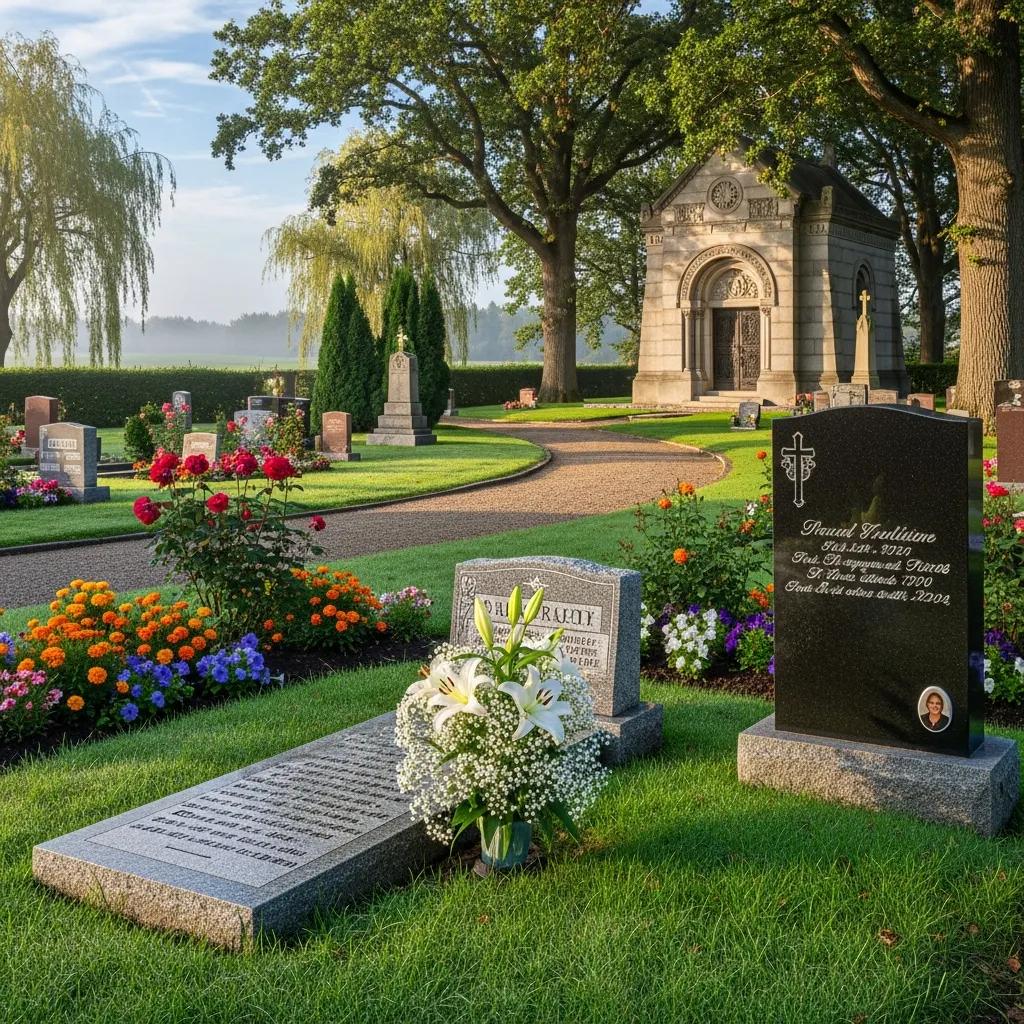
In-ground burials typically involve placing a casket in a grave and often pair with more traditional markers. Flat markers (set level with the lawn) offer a low-profile, easy-to-maintain option. Upright headstones provide a more prominent presence and room for larger inscriptions or artwork. Durability and upkeep matter, so material choices like granite are common because they stand up well to weather and time.
Memorial Options for Mausoleums, Crypts and Other Above-Ground Burials
Above-ground interment—mausoleums and crypts—creates different design possibilities. These structures can be highly personalized, from ornate mausoleum facades to interior plaques and sculptural details. Decorative bronze plaques, carved stone elements, and bespoke sculptural work let families create a distinctive, enduring tribute that complements the architecture of the space.
Scholars often categorize burial and memorial types by whether the body’s presence is visible or concealed, which helps explain the different memorial approaches.
Crypt, Mausoleum, Cenotaph, Sepulchre: Burial & Memorial Types
One way to classify memorials: a crypt conceals a body; a mausoleum displays it; a cenotaph commemorates absence publicly; a sepulchre marks concealed absence.
CRYPT, MAUSOLEUM, CENOTAPH; SEPULCHRE: Metaphors of encryption, 2020
Which Grave Marker Styles Work Best for Different Burials?
Choosing a marker style is both practical and personal. Styles differ in visibility, maintenance, and how much space they offer for inscriptions or decoration. Below are common choices and where they typically fit.
What Defines Flat, Upright, Bevel, and Slant Markers?
Grave markers
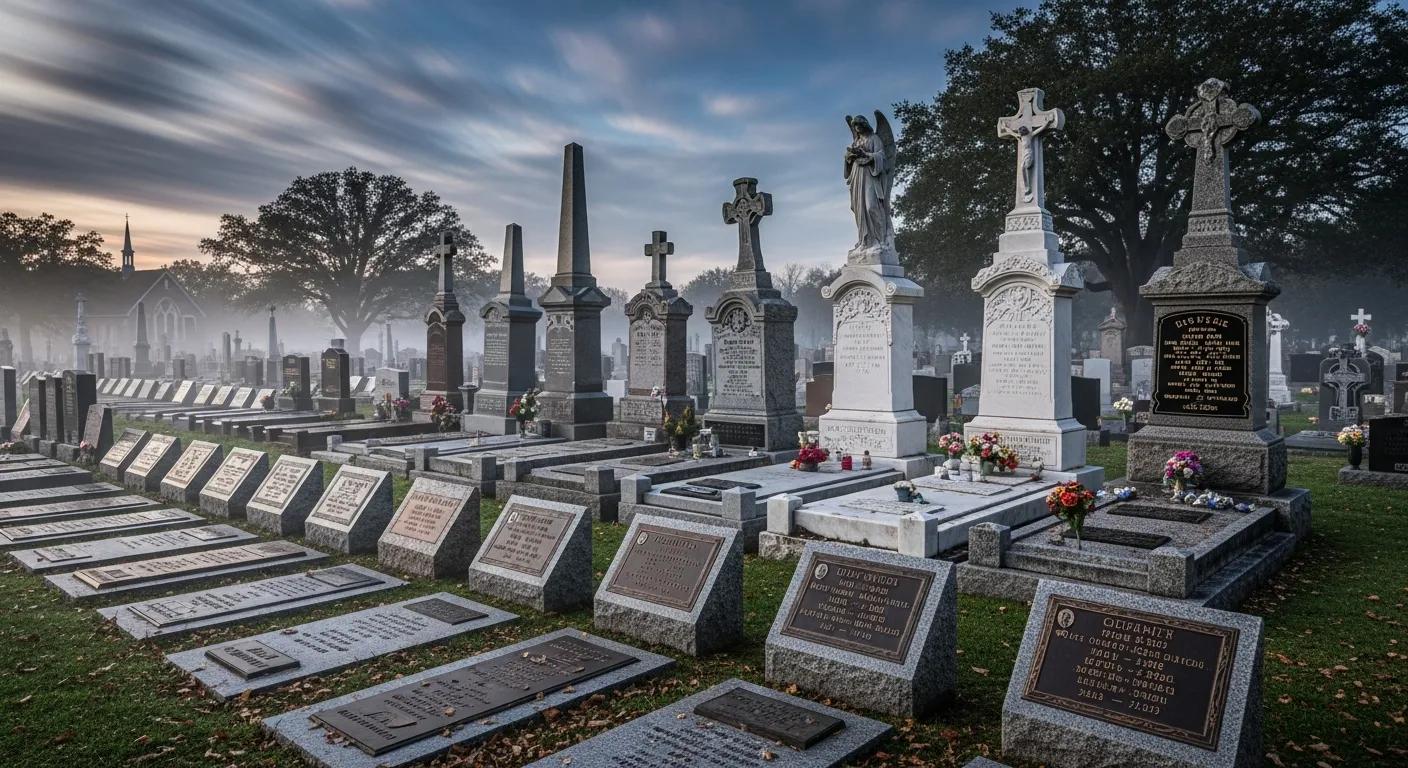
are available in several classic styles: flat, upright, bevel, and slant.
- Flat Markers
: Set flush with the ground, flat markers are understated and tidy—often chosen for lawns and parks where upkeep is simplified.
- Upright Headstones
: Freestanding stones that stand tall and offer a larger canvas for inscriptions, symbols, and carved detail.
- Bevel Markers
: Slightly angled, bevel markers sit low but offer a bit more presence than a flat marker—an elegant compromise.
- Slant Markers
: With a more pronounced angle than a bevel, slant markers read well from a distance while remaining lower than full upright headstones.
Each style has practical trade-offs—visibility, maintenance, and cemetery rules should guide your choice as much as personal taste.
How Companion and Custom-Shaped Headstones Add Meaning
Companion headstones are crafted for two names—often partners—and allow shared inscriptions and design elements that reflect a life together. Custom-shaped headstones go further: they can echo a hobby, profession, or personal motif. These tailored shapes and engraved portraits create a unique focal point that tells a more personal story than a standard marker.
What Materials Work Best for Memorials by Burial Type?
Material choice affects longevity, look, and care. Some materials are better suited to particular burial settings or family priorities—durability, maintenance, and aesthetic all play a role.
Why Granite Is a Common Choice for In-Ground and Above-Ground Markers
Granite is prized for its strength and weather resistance, which is why many families choose it for both ground-level and standing memorials. It comes in a variety of colors and finishes, so you can select a look that feels right while relying on a low-maintenance, long-lasting material.
When to Consider Bronze, Marble, or Biodegradable Options
Bronze is popular for plaques and markers because it ages gracefully and resists corrosion. Marble offers a classic, elegant appearance but needs more care and is softer than granite. For green burials, biodegradable materials—wood, sustainable composites, or natural stone—support an eco-minded approach and allow the site to remain more natural over time.
How Personalization Makes a Memorial Truly Meaningful
Personal touches transform a stone or plaque into a personal story. Thoughtful customization helps families express personality, values, and memory in ways that comfort those who visit.
Engraving, Portraits, and Artwork: Customization Options
Families can choose from a range of engraving techniques, laser portraits, emblems, and carved artwork. Short quotes, favorite symbols, or meaningful dates add context; portraits and bespoke motifs make a marker distinctly recognizable and emotionally resonant.
How Personalized Memorials Reflect Legacies and Family Wishes
Personalized memorials hold family stories, values, and wishes in a tangible form. Incorporating meaningful details—interests, shared experiences, or religious symbols—helps ensure the memorial honors the person in a way that feels authentic and brings comfort to visitors.
Memorial Options for Cremation and Green Burials
Cremation and green burials open different memorial possibilities. Both routes offer flexible and often more compact or eco-friendly ways to remember someone.
Cremation Memorials: Urns, Columbariums, and Benches
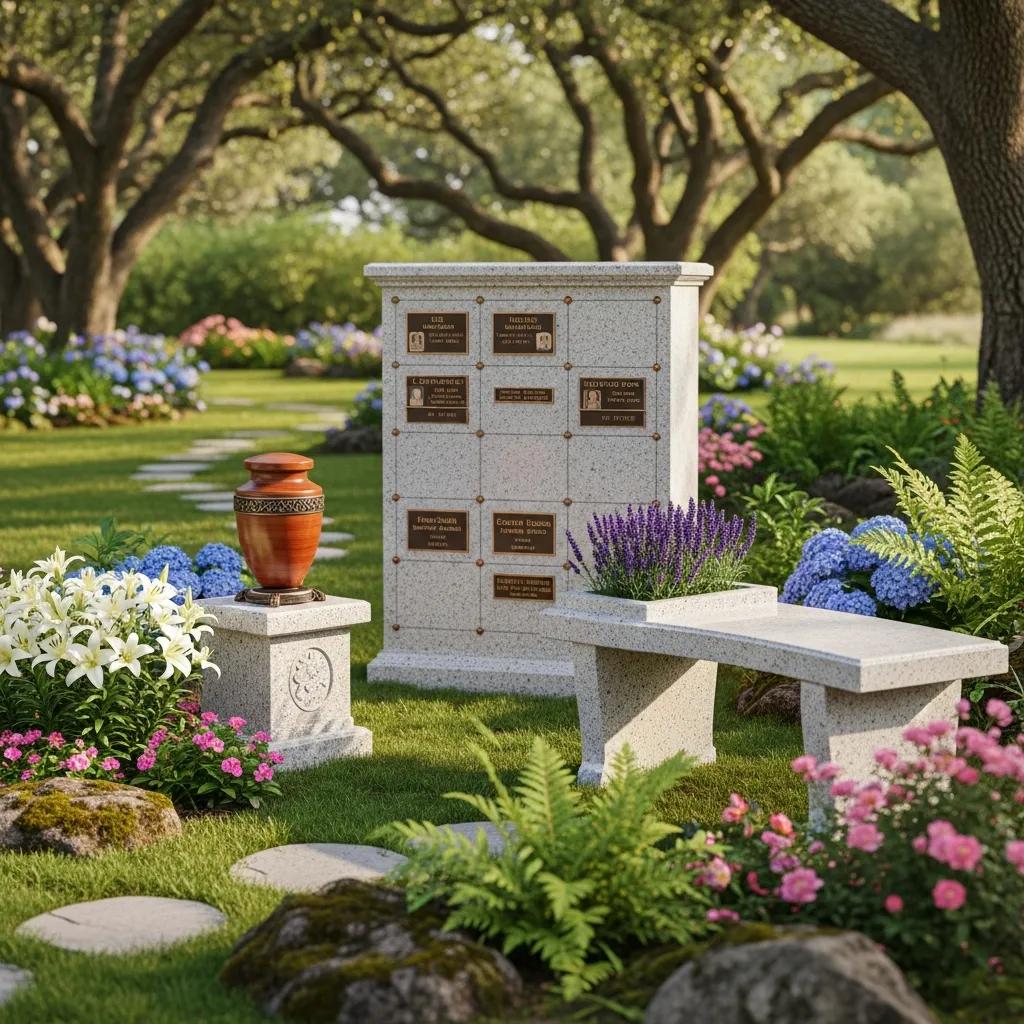
For cremation, families often choose urns, columbarium niches, or memorial benches. Urns can be engraved or decorated; columbariums provide a dedicated, visitable space for urns; and memorial benches offer a functional, contemplative place in a park or garden setting—combining use with remembrance.
Eco-Friendly Markers and Materials for Natural Burials
Green burials prioritize low impact and natural return to the earth. Common markers include simple fieldstones, wooden plaques, or planted memorials that blend into the landscape. These options keep the site natural while still offering a place to visit and remember.
Research into natural burials underscores the preference for minimal intervention and memorials that sit lightly on the land.
Natural Burial Options: Markers, Headstones & Memorialization
Practices often include no embalming, natural or biodegradable markers, simple caskets, and memorial items that support the site’s return to a natural state.
Rest in Green: Exploring the Sustainability of Natural Burials, 2024
How Cemetery Rules and Practical Considerations Affect Memorial Choices
Cemetery policies shape what you can install. Size limits, allowed materials, and placement rules vary from one cemetery to another, so checking regulations early avoids surprises and helps you design a compliant, beautiful memorial.
Typical Rules for In-Ground and Above-Ground Installations
Common requirements cover maximum dimensions, foundation needs, and approved materials. In-ground markers may need uniform size or specific footing; above-ground structures often have stricter height and engineering standards. Always consult cemetery staff before finalizing plans.
How Regulations Influence Design, Size, and Materials
Rules can limit the height of a monument, require particular stone types, or mandate installation methods. Knowing those constraints early helps you choose a design that meets your aesthetic goals and complies with the cemetery’s guidelines.
Frequently Asked Questions
What should I consider when choosing a memorial for a loved one?
Think about the person’s personality, cultural or religious traditions, and how the site will be visited. Consider the burial type, cemetery rules, maintenance needs, and how much personalization you want. Aim for a memorial that feels true to the person and practical for the family.
How can I make sure my memorial choice follows cemetery rules?
Start by asking the cemetery for their specific requirements—sizes, materials, and installation standards vary. Get any approvals in writing before ordering a marker to avoid delays or changes at installation time.
Why choose biodegradable materials for a memorial?
Biodegradable options support environmentally focused burials and allow the site to return to a natural state. They’re a good fit for families who prioritize sustainability and a minimal long-term footprint.
What are some memorable personalization options?
Popular choices include engraved quotes, laser portraits, meaningful symbols, custom shapes, and carved motifs. Some families add QR codes that link to a life story or photo gallery. Choose elements that feel authentic and will stand the test of time.
How are companion headstones different from single markers?
Companion headstones are designed for two names and often include shared inscriptions or designs that reflect the couple’s life together. They offer a joined visual presence on a single grave or plot.
What makes granite a preferred memorial material?
Granite combines durability, low maintenance, and visual variety. It resists weathering, comes in many colors and finishes, and provides a reliable surface for long-lasting inscriptions and artwork.
What should I know about cremation memorials?
Cremation memorials come in forms that range from personal keepsakes to public installations—urns, columbarium niches, memorial benches, and family plots. Each option offers different levels of visibility, personalization, and communal access for visitors.
Conclusion
Choosing a memorial is a personal decision that combines respect, tradition, and practical considerations. By understanding burial types, marker styles, materials, and personalization options, you can create a meaningful tribute that honors a life and supports those who remember them. If you’d like guidance, visit our site to explore products and connect with our team for help tailoring a memorial to your needs.






 0% Instalment Plans - Up to 12M - Call For Details!
 Free shipping
