

Bible Verses for Headstones: A Commonplace Book of Scripture in Stone

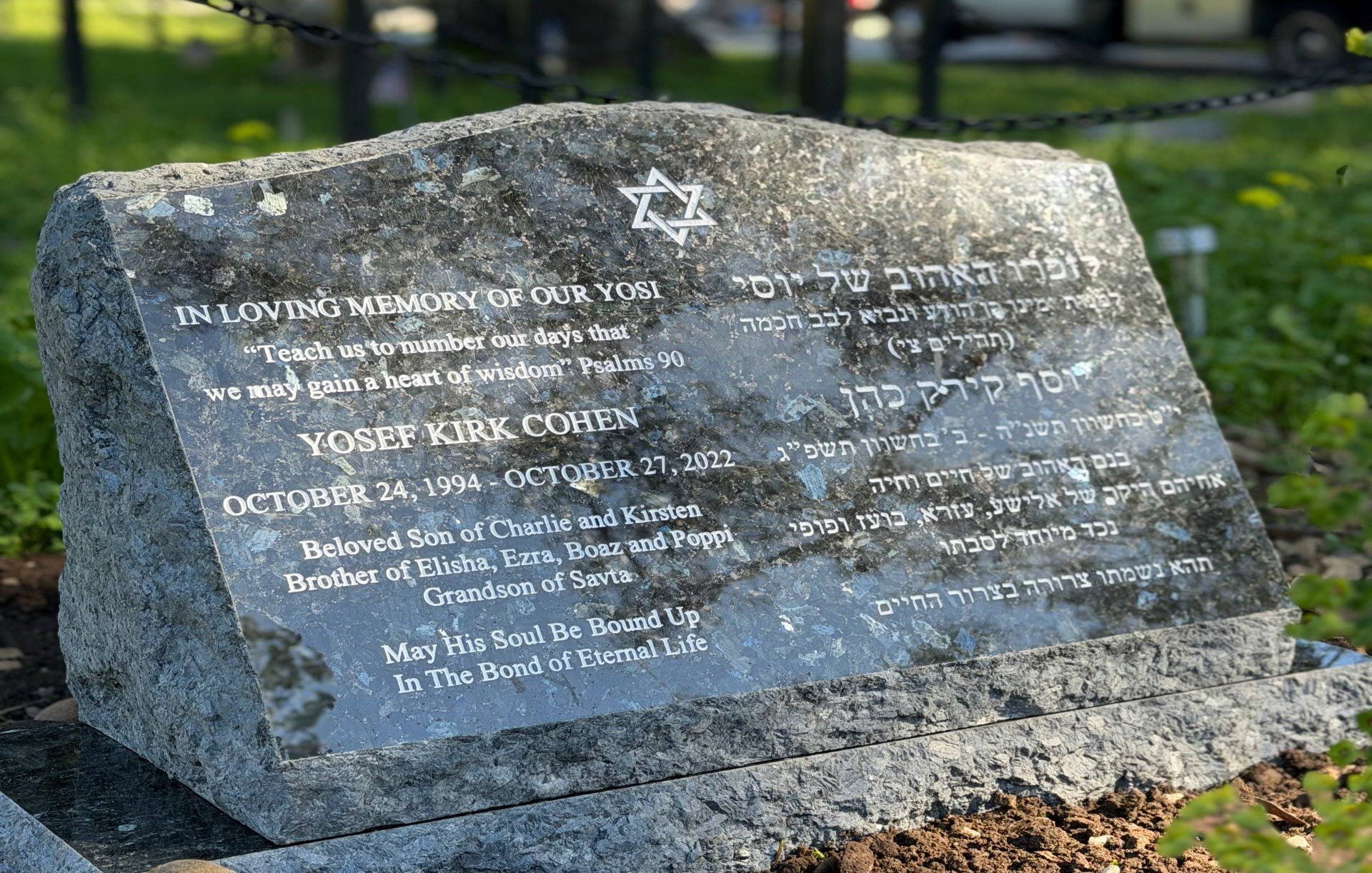
Before the Internet, people used commonplace books, bound notebook volumes in which the useful words were copied by hand – verses, prayers, extracts from letters. When a person died, his commonplace book usually became a source for a headstone inscription. This page is a commonplace book of our workshop, compiled in exactly the same way. We copy the Bible verses for headstones most often chosen by our clients, fully, in the King James translation whose rhythm is perfect for the stone, and under each verse we put the keeper’s note – the practical wisdom accumulated through decades of inscribing scripture into granite. Copy freely. That is the purpose of a commonplace book.
“The Lord is my shepherd; I shall not want.” – Psalm 23:1
Keeper’s note: the most widely carved line in American cemeteries, and it definitely deserves the title. Nine words – short enough to fit any marker under any name, from a narrow flat stone to a family upright, and be legible from the path. People sometimes worry that choosing the most popular verse is too obvious. But after thousands of headstones our experience shows that a shepherd remains a shepherd even if the flock is large. If the psalm belonged to her, it belongs on her stone.
“I have fought a good fight, I have finished my course, I have kept the faith.” – 2 Timothy 4:7
Keeper’s note: the verse of the staunch and steady – veterans, pastors, matriarchs, anyone whose life could be described as a long loyalty. Sixteen words require either a wide inscription area, or the three clauses divided into three lines – and we recommend the latter because the stacking turns the verse into a staircase and the eye climbs it. Deeply carved block letters suit its firmness better than scripts.
“Blessed are the pure in heart: for they shall see God.” – Matthew 5:8
Keeper’s note: taken from the Beatitudes, and the most sought-after verse for children and the gentle people. For children’s memorials we often use only the second half of the verse – “for they shall see God” – under the lamb or angel, and the abbreviation loses nothing because the family completes the phrase from memory each time. And that is the secret of scripture on the stone – granite needs only to carry enough words to remind.
“Weeping may endure for a night, but joy cometh in the morning.” – Psalm 30:5
Keeper’s note: chosen by people who expect the stone to console its visitors as well as commemorate its resting one. It sounds like an address to the living – and that is what the best inscriptions quietly do. It naturally belongs to a companion stone or bench monument, where the family will sit with it. Twelve words: we will show you a wider format and a smaller letter for this verse, in the free design preview before anything is cut.
“I am the resurrection, and the life: he that believeth in me, though he were dead, yet shall he live.” – John 11:25
Keeper’s note: the great funeral text, used for centuries at the graveside before our granite found its way there. Fully carved it is a commitment – twenty words – and it deserves the stone which can hold it: uprights, ledgers, broad backrest of the bench. Many people choose to inscribe only “I am the resurrection and the life” and leave the graveside memory to complete it. Either way, this is the verse we most often see people touch.
“Be still, and know that I am God.” – Psalm 46:10
Keeper’s note: eight words which have become the modern favorite for the quiet people – gardeners, fishermen, the family members who said little but meant all of it. It goes naturally with etchings: still water, bench under the tree, mountains. If your person’s peace was a place, this is the verse which lets the granite tell the place and say the peace.
“And now abideth faith, hope, charity, these three; but the greatest of these is charity.” – 1 Corinthians 13:13
Keeper’s note: the love chapter, and the verse we carve most often for mothers. Some people prefer the modern wording with “love” – we carve “love” or “charity”, and the design preview will show your precise translation – check it word for word at the proof stage because the translations differ, and the stone will keep whichever one you approve. For double and companion markers this verse placed center between the names becomes a perfect eulogy.
“He shall cover thee with his feathers, and under his wings shalt thou trust.” – Psalm 91:4
Keeper’s note: scripture and image in one piece – the verse brings the instructions for carving with it. It is the natural match for angel and wing designs, and where the family prefers imagery without figures, the feather alone, carved fine, tells the whole psalm for the people who know it. This is also the verse we recommend when the family wants angel symbolism but the cemetery rules forbid statues: the words are always allowed even when the statue is not.
Even shorter: the fragments. The commonplace book always holds the fragments, and stones have limited space. The fragments people carve continuously: “Till we meet again.” “In God’s care.” “Asleep in Jesus.” “The Lord gave, and the Lord hath taken away” – Job’s terrible, faithful calculation, often abbreviated to “The Lord gave.” “Well done, thou good and faithful servant” – the servant’s verse, much loved for fathers. Each of these fits the smallest marker we make, and none loses meaning due to brevity. Scripture was quoted in fragments since its beginning; the stone is in good company.
The keeper’s practical notes. How verse meets granite, in the order people usually request it: Length – count the words, and then see the free design preview with the verse at its true size on the chosen marker; we adjust letter height and layout through included revisions until name and verse both breathe. Translation – bring the precise wording your family uses; we engrave what you approve, letter for letter, and engraving is included in the price of every stone. Placement – beneath the name is traditional, but arcs above, backrests of the benches, and risers of the slant markers all tell the scripture well, and cemetery rules rarely restrict wording while restricting everything else. Date the decision kindly: take the preview home, read the verse aloud at the kitchen table, and hear whether it sounds like them. The commonplace books always got that part right – the words worth keeping were the ones the household already knew by heart. Copy freely, from this page to your family’s stone. That is the purpose of both books.
