

The Year After: One Timeline, Many Traditions

“Grief has no timetable,” the adage goes – but it seems humanity has a plan to disagree. Line up the grief customs practiced around the globe and a fascinating picture emerges – every tradition has designated days of gathering, praying, feasting, visiting the grave site – and those designated days have a lot in common: the third day; the seventh or ninth; the fortieth or forty-ninth day; the hundredth day in some traditions; everywhere and in all traditions, the anniversary. Divergent beliefs, different continents, eerily similar calendars – as though somehow the species has independently field-tested an important discovery: grief scheduled is grief shared. Thus this article charts the year with one unified timeline, tradition next to tradition, day after day. Whatever your family’s traditions may be – and American families increasingly weave more than one – the timeline shows you your own calendar and the other families whose schedules move in parallel.
Days one through three: the first milestone. The first days on the timeline belong to burial and gathering virtually everywhere, and the third day is the first milestone to appear universally. Orthodox Christian tradition conducts a memorial service on the third day; the third day is highly significant in Christian tradition overall, for Easter makes that quite clear. The Islamic ta’ziya involves a family condolence reception in the first three days; in the ta’ziya, food is brought in (prepared by others; as is well known, the stove of the grieving family remains cold) as visitors come to sit with the family. Jews commence their shiva – seven days of being visited and comforted in one’s own house. First observation: no tradition leaves a family alone in those initial days. Loneliness, the calendars insist, comes later, and they have been designed to interrupt that.
Days seven and nine: the first return. On about the seventh day, the timeline clusters again. Jews complete their seven days of mourning with the completion of shiva, and make their famous circuit around the block – the deliberate, formal step back into the world. Orthodox Christians conduct their memorial on the ninth day. In many Hispanic Catholic communities, the novenario completes its cycle – nine evenings of prayers, including the rosary, in which the house of the family is visited nightly, concluding at this very milestone with a major gathering. Seven or nine, the format is exactly the same: one week of communal mourning followed by an important ritual step – a way for the tradition to say the words a family is unable to say yet: life will resume, and you will be supported as it does.
Day forty (and forty-nine): the universal milestone. Now the timeline’s convergence becomes truly strange. The fortieth day is the climax of a surprising range of unconnected traditions: Orthodox Christianity’s most significant memorial, in which the journey of the soul is traditionally thought to complete itself, and families congregate at church and graveside; in many cultures the Islamic arba’een, the family observance, marks the fortieth day with prayers and remembrance; throughout the Buddhist world the counting reaches forty-nine days – seven weeks of seven days, the intermediate journey of Tibetan and East Asian tradition, with special services at each seventh day and the final commemoration at the forty-ninth. Six weeks, give or take: the timeline’s witness is that in every part of the human world, at this point in the year, tradition has arranged the turning point – the deep mourning completed, the long remembrance begun. Grief counselors point out, without needing the theology, that the six-week milestone falls where every family needs a bit of help: after the casseroles, before the equilibrium.
Day one hundred, and the first Mother’s Day problem. Some traditions – Chinese, and East Asian custom generally – include the hundredth day, a milestone for family gathering as the middle portion of the year passes. And the timeline has to honestly chart what every tradition recognizes informally: ambush days, between milestones – first birthdays, first holidays, the empty chair at the first Thanksgiving. The milestones do not prevent the ambush days, but they prepare for them. A family that has gathered at the third, the ninth and the fortieth days has learned the art of the ambush days: grieving together, on purpose, out loud. And the message of the timeline quietly becomes that this is precisely what the entire calendar has been preparing for.
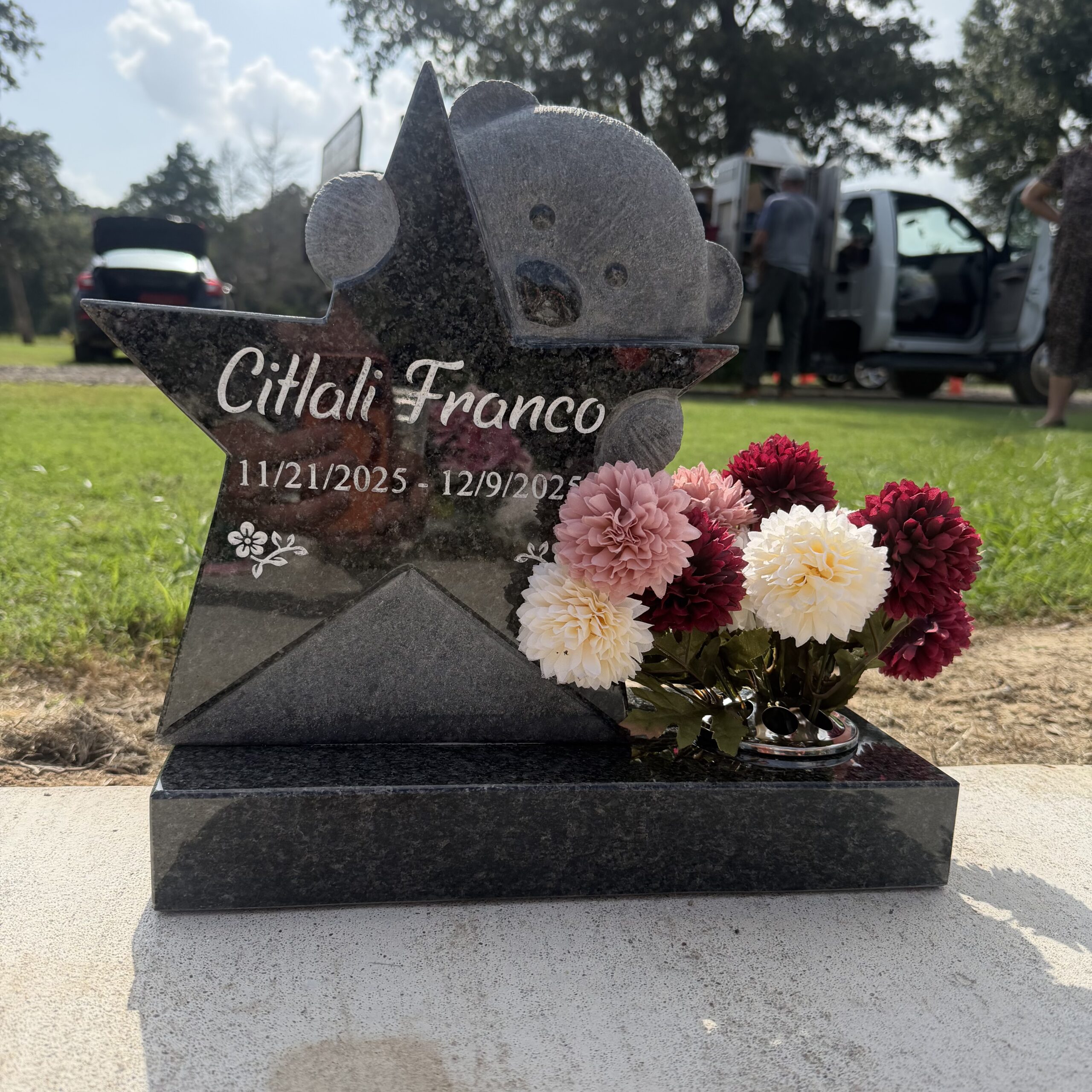
Day 365: the year’s climax, and the stone. Every tradition on the timeline unites at the anniversary. The yahrzeit candle burns for a full twenty-four hours in Jewish households, the Kaddish is recited, and – in the particularly wise custom of American Jewry highlighted by this timeline – monument unveiling is traditionally conducted at the year’s end: families congregate, the veil is removed, the stone bears the family name, the deep mourning is concluded. Orthodox families hold the year’s panikhida; Hispanic families mark the cabo de año, the year-end mass and gathering; everywhere, the grave is visited, cleaned, decorated. And this is where the timeline intersects with our business, for across cultures the year’s end is when the monument enters the picture – the year’s goal for the stone to be ready, correct and worthy of the gathering around it. This is why our scheduling treats a family’s anniversary or unveiling date as a deadline of the highest order; why the design process – free 3D preview, revision rounds, native reader review of the scripts of all traditions, engraving included in the listed price, delivery included, 0% plans and pre-need terms – moves to the pace of the family’s calendar, and not our own; and why the practical advice of the timeline to a family at its first milestones becomes this: between day forty and the midpoint of the year, start your stone. The year’s end comes quicker than grief anticipates, and the traditions have planned something for that day. Plan yours.
After the year: the timeline loops. Post-day 365, every tradition converts the line into a circle: the annual yahrzeit; the Orthodox year-mind and Soul Saturdays; the death-day remembrances of East Asia merging into the major visiting festivals; the annual family meeting at the Mass marking the end of the novenario; Día de los Muertos gathering everybody – and beautifully – regardless of whether the death took place one year or fifty years ago. The timeline of the first year, it seems, has been a curriculum for a lifelong rhythm – the annual milestones on which the family will gather, speak the name, touch and maintain the stone. Which is the timeline’s conclusion and the reason it belongs on a monument maker’s web page: the calendar of humanity everywhere ends at the same point – a family, a date, and a name engraved in stone to gather around. The date and the family are your responsibility. The name engraved is our craft, and it is crafted to serve every appointment the circle will make in the future.
