How Personalized Headstones Really Start: An Explanation of the Intake Form

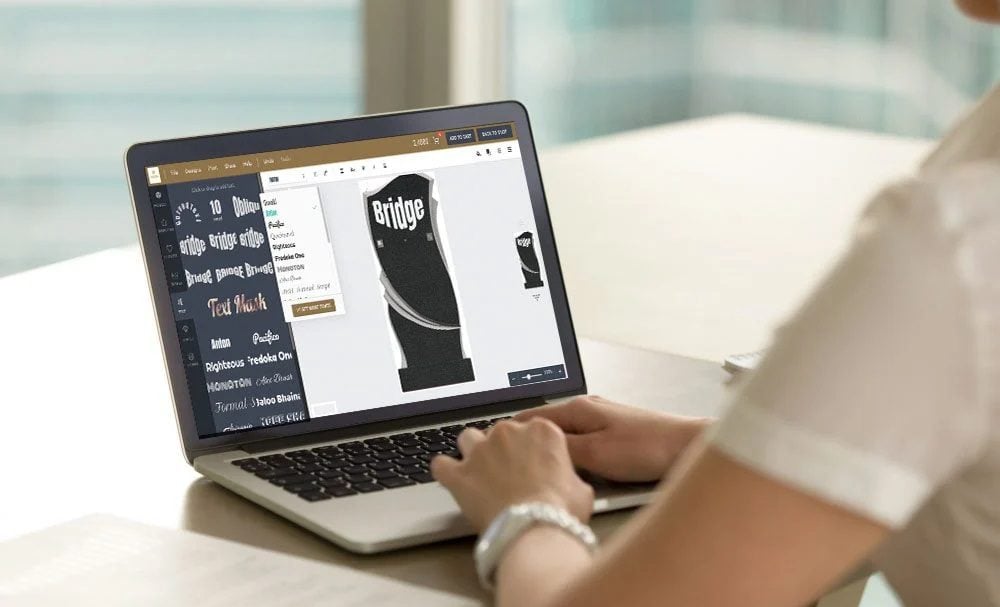
Every custom monument that we produce starts off in the same way: a form. Families may find it surprising that it is not some more elaborate process, as they come here with the whole person – so this article serves the same purpose as we do at our counter: it walks the family through the form from start to finish. The reason for the form’s existence is much more important than bureaucracy. It is the machine, the device, that transforms a person into a design brief. It was tested and developed over thousands of personalized headstones, and to know what it does in advance is the difference between having a custom stone and having a personal one. Let us see what it does and why it does it.
Field 1: Name of the cemetery and the section of the cemetery. The first question on this form is never a question about the person. And yet it is always a surprise to the families. The reason is simple – the rules that govern the sizes, formats and materials allowed at the cemetery are the borders of the canvas we will work with. You enter the name, and we contact the cemetery and get the rules of the section in writing directly from their office. This is not personal, but totally necessary – the most painful thing that you can hear after falling in love is “They won’t allow it”. We make sure you never hear it.
Field 2: Format. Flat, bevel, slant, upright, bench or ledger – boxes with options, with a box that lets you check “Not sure”. Most families do that, and they are absolutely right. What this field is asking in essence is: how is this stone going to be visited? Is it going to be read while the visitors stand on the path (upright or slant), stand over it (bevel or flat), sit with it (bench) or give it the whole ground (ledger)? At our desk, it is translated from visiting habits to format suggestions, and the true reason for this field is to start the conversation, not to finish it.
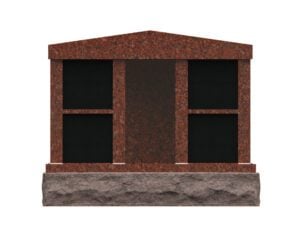
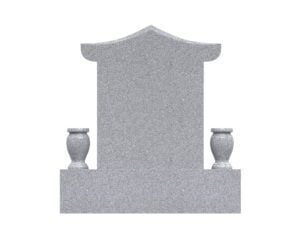
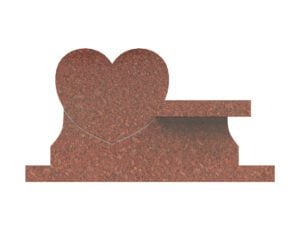
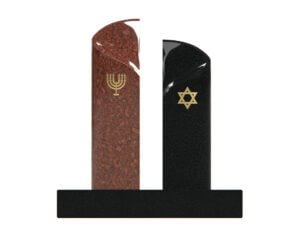
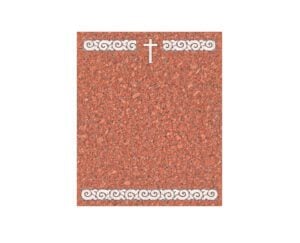
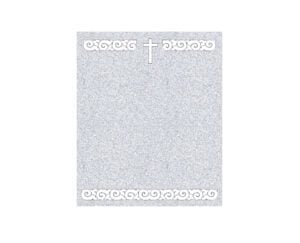
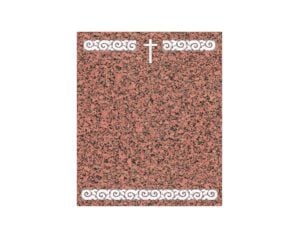
Field 3: Color of granite. This is the palette field, grays, blacks, reds and the colors of the imported stones. And this is the note the families should keep in mind: this is a readability issue disguised as a beauty question. The deep granites are for the etched portraits and high contrast; the classic grays harmonize with the older family stones. Every color is readable differently in wet, dry or dusk conditions. The field asks for a preference; the free 3D preview will show you how it looks with your actual inscription on it, which is the point where preference turns into decision. Note next to the field, based on years of phone calls: if you want to match the existing stone from the family, please send us a daylight picture of it – don’t match from memory.
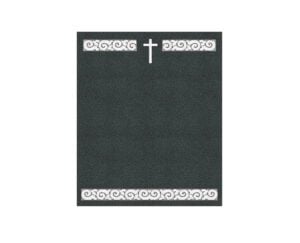
Field 4: The name. This is the sacred field, boxed and isolated: it must contain the full name as it should appear on the tombstone. Letter by letter. The annotation: granite is a document. The production of this monument will stop on every discrepancy between the name that is written in this field, the proof and the paperwork. Bring the spelling from the birth certificate and the name from the porch; the design will make room for both of them.
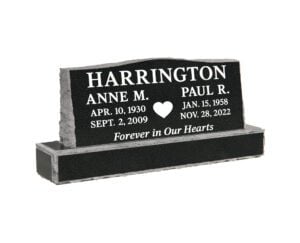
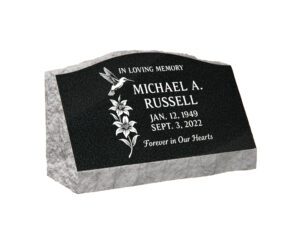
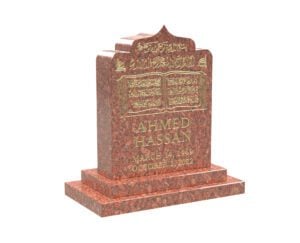
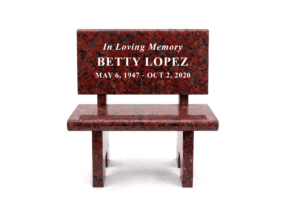
Field 5: The dates and the dash. Birth and passing date of the person, formatted as you want – in full dates, years only, or the old traditional ways. Quiet annotation next to this field, delivered gently by our staff: this is also the field for the pre-need customers, for those who want to put their birth year and the open dash now, and it is the field where the second inscriptions on the companion or multi-name stone are planned – this form accommodates lives in progress. The archived design file guarantees the consistency of the future date with the first engraving letter by letter and at the same depth.
Field 6: Epitaph line. The blank space with a printed recommendation above it: short outlives long. What the field is asking for is not the summary of the person’s life – no line will survive such assignment – but the line that the family says: the phrase from her cards, the standing joke from him, the blessing, the verse. One of our reviewers recently described our consultant as holding her hand “every step of the way” through exactly this field, questions and all, and this is exactly what the field is designed to allow. It is allowed to be left blank. It is usually filled in at the proof stage when the family sees the stone with and without epitaph and someone in the kitchen just says the line.
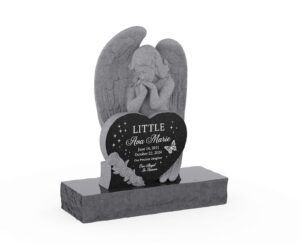
Field 7: Portraits and Photographs. This is the attachment field – the photographs for the laser-etched portrait on polished granite and the porcelain photo medallions, with the boxes for size and placement. The annotation, from the etching bench: please send several candid photographs, not the formal one – the true face is usually mid-laugh somewhere in somebody’s backyard, and etching reproduces it with disturbing accuracy. The porcelain and the etched portraits are the reasons why the personalized headstones usually stop the stranger in the middle of the path. The preview will show the exact crop before anything is fired or cut.
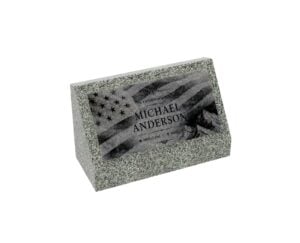
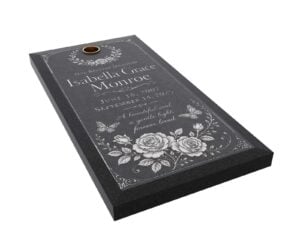
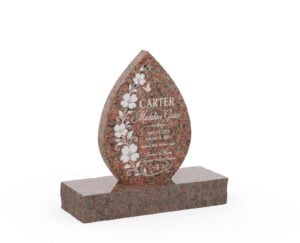
Field 8: The emblems, symbols and scenes. This is the checklist field – the religious emblems, service insignia, hobbies, trades, flower symbolism and the blank box labeled other, which is the place of the personalization. The annotation, from the design desk based on the accumulated blanks: the registered cattle brand. The 1962 Impala. The knitting needles and the half-finished sock. The exact lake, from the exact dock angle. This field is the whole idea behind the form; fill the blank with the symbol that only your family would think of carving and let our engravers figure out if the granite can accommodate it. In our experience, it can.
Field 9: Payment preference. This is the last field of the form before signatures, and its annotation is the clearest one: full payment or the installment plan with our zero percent terms up to twelve months, longer plans available, veteran and first-responder rate on installment plans, engraving already included in all prices and free shipping to the lower 48. The field is needed in order to prevent payment anxiety from editing Field 8 – the personalization field. Design the stone; the terms will fit.
After the form: the loop of proofs. After the completion of the form, the family gets the free 3D design preview of their stone – granite, words, emblems at the real scale. The revisions are included so that the answers in the form can be argued into their final shape at the kitchen table, which is the right venue. The families revise on average twice; the record is held by a family that we admire greatly. When the proof stops arguing and starts giving silence, it is time to go to production of the stone, which cannot be contained in any form field – which, from Field 1, was the whole purpose of the form.