

Bronze Grave Markers vs Granite: Which Lasts Longer?

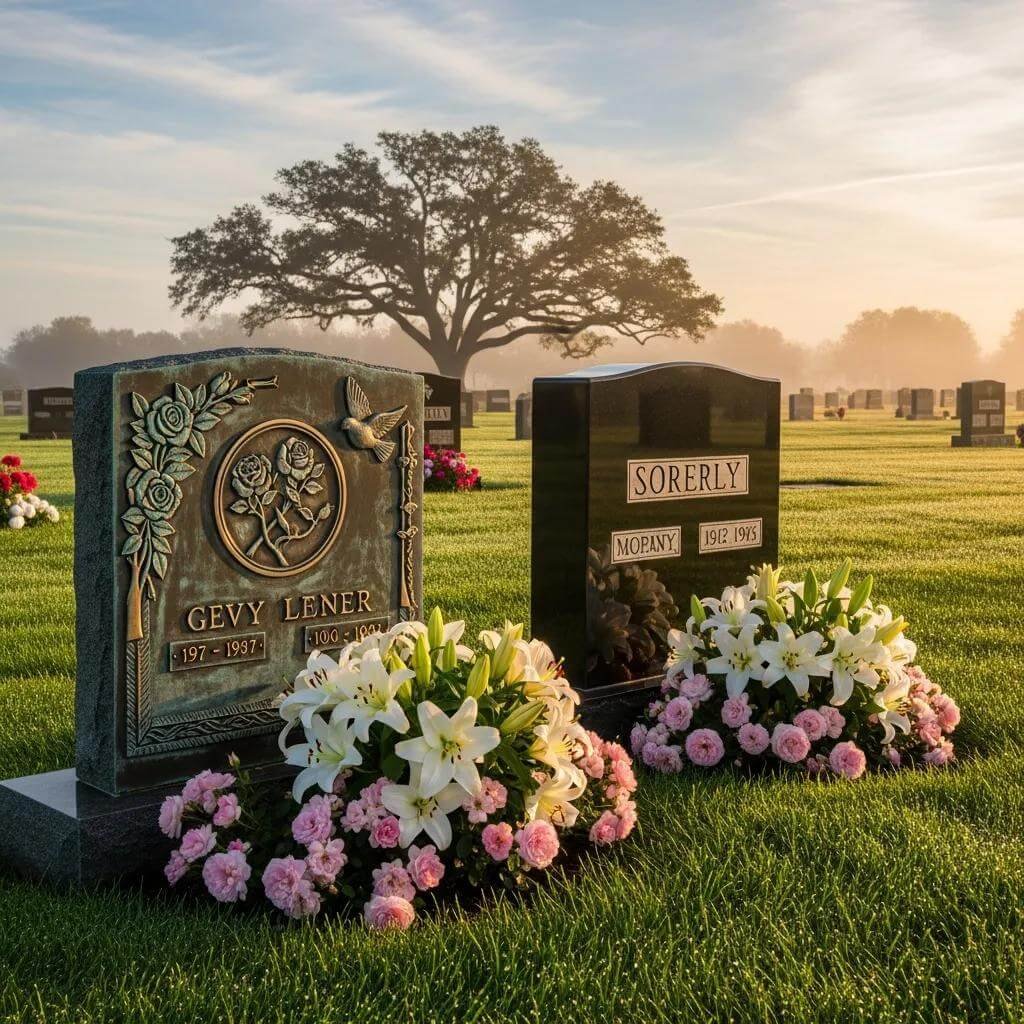
Bronze Grave Markers vs Granite: Which Lasts Longer? A Durability and Value Comparison
Selecting a grave marker requires careful consideration of durability and longevity. Bronze and granite are among the most common choices, each with distinct strengths and limitations. This article examines how the two materials compare in durability, cost-effectiveness, and the factors that affect their service life. The goal is to help you decide on a respectful, long-lasting memorial for your loved one.
Comparison of Bronze Grave Markers vs. Granite Grave Markers
Bronze and granite both serve as enduring tributes, but they differ in composition, appearance and maintenance. Bronze is a metal alloy — primarily copper — that offers a traditional, refined appearance. Granite is a natural stone valued for its robustness and resistance to weathering. Recognising these distinctions will assist you in choosing the material that meets your aesthetic and maintenance expectations.
Durability:
Durability determines how well a memorial withstands time and the elements. Bronze and granite possess different physical properties that affect their longevity and the type of care they require.
Bronze Grave Markers:

Bronze markers are prized for their appearance and can remain serviceable for more than 50 years with appropriate care. They resist cracking and mechanical damage but are susceptible to surface tarnish from pollutants. Routine maintenance — gentle cleaning and optional waxing — preserves finish and integrity. Bronze also develops a patina with age, which some families retain for its character while others choose to restore the original sheen.
Studies on protective coatings examine methods to maintain bronze appearance and structural resilience over time.
Enhancing Outdoor Bronze Durability with Protective Coatings
This thesis looked to test other coating options for outdoor bronze sculpture and evaluate their durability and removability with modern conservation equipment when compared to the currently used coatings.
Testing Protective Coatings and their Removal for Outdoor Bronze Statuary, 2021
Granite Grave Markers:

Granite is known for exceptional longevity, commonly expected to last more than 100 years. It endures weathering, resists freeze–thaw damage and is generally less vulnerable to surface deterioration than metal. Maintenance needs are minimal; a yearly rinse with mild soap is typically sufficient to preserve appearance. These characteristics make granite a practical choice for a low‑maintenance, long‑term memorial.
Research supports granite’s capacity to withstand environmental stresses such as repeated freeze–thaw cycles.
Granite Durability: Freeze-Thaw Cycle Impact
The influence of freeze-thaw cycles (FTC) on the flexural strength of granite was investigated. Specimens from three different types of Australian granite were subjected to different numbers of FTC. In terms of strength and durability, granite has been widely used as stone veneers in construction.
Flexural strength of weathered granites: influence of freeze and thaw cycles, S Noor-E-Khuda, 2017
Cost-Effectiveness:
Cost-effectiveness includes both initial purchase price and long‑term value. Evaluate upfront expense, ongoing maintenance and the expected service life of each material when comparing total cost.
Historical analyses show that economic and social conditions have long influenced the selection and cost of grave marker materials.
Economic & Social Factors in Grave Marker Material Choice
Social and economic factors significantly influenced grave-marker choice in southern California cemeteries during the nineteenth and twentieth centuries. Financial conditions directly affected decisions regarding those materials selected to mark the deceased as well. Although overall trends reveal that granite gravestones gradually replaced marble as the marker of choice in the late nineteenth and early twentieth centuries, pronounced fiscal struggles during the 1907 Bankers’ Panic and the Great Depression were evinced in distinct surges in less expensive marble and metal grave markers.
Mortality, money, and commemoration:
Social and economic factors in Southern California grave-marker change during the nineteenth and twentieth centuries, S Mallios, 2011
Bronze Grave Markers:
Bronze markers typically sit in a moderate to high price bracket, influenced by design complexity and customisation. The initial cost can be greater than stone, but many families find value in bronze’s appearance and durability over time. Custom bronze grave markers can be tailored to personal preferences and add sentimental significance.
Granite Grave Markers:
Granite markers span a broad price range depending on size, finish and engraving. Because granite requires little maintenance and has a long expected life, it is often more economical over decades. For those with tighter budgets, granite commonly presents a durable, cost‑effective option.
| Material | Cost Range | Lifespan |
|---|---|---|
| Bronze | Moderate to High | 50+ years |
| Granite | Low to High | 100+ years |
The table summarises the financial trade‑offs between initial expense and long‑term durability; both should inform your selection.
For a range of available styles and materials, Capital Grave Markers offers a selection to review.
Factors Influencing Longevity and Cost-Effectiveness:
Longevity and value depend on material properties, local environmental exposure and cemetery rules. Site conditions and required foundations can affect installation costs and the marker’s long‑term condition. Consider these factors together when planning a memorial.
Frequently Asked Questions
What are the environmental impacts of bronze and granite grave markers?
Bronze and granite differ in environmental effect. Bronze may tarnish from airborne pollutants and requires maintenance; it does not typically release hazardous substances during normal use. Granite is more resistant to weathering and does not leach harmful materials, but quarrying and transport have ecological impacts, including habitat disturbance. Balance these considerations when choosing a material.
How do I maintain a bronze grave marker?
Care for bronze with gentle, regular cleaning using a mild soap solution and a soft cloth to remove grime and pollutants. Applying a protective wax can help preserve finish and slow tarnishing. Over time a natural patina will form; some families retain this finish, while others opt for periodic polishing to restore original brightness.
Are there customization options available for granite grave markers?
Granite offers many customisation choices: a range of sizes, shapes and surface finishes, plus engraving for names, dates and messages. Providers may also offer etched images or symbolic motifs, enabling a personalised and enduring tribute.
What factors should I consider when choosing between bronze and granite?
Assess durability, maintenance requirements, aesthetic preference and budget. Bronze provides a traditional metallic appearance but needs more upkeep; granite is highly durable with lower maintenance. Also consider cemetery conditions and the emotional significance you attach to material and appearance.
How do cemetery regulations affect the choice of grave markers?
Cemetery policies commonly specify acceptable sizes, materials and installation methods to preserve appearance and stability. Some sites restrict certain materials or require specific foundations. Confirm requirements with cemetery management before purchase to ensure compliance.
What is the average lifespan of a granite grave marker?
Granite markers typically endure for more than 100 years. Their resistance to weathering and freeze–thaw damage, combined with simple annual cleaning, allows them to retain structural integrity and appearance across generations.
Conclusion:
In conclusion, granite generally provides greater long‑term durability, while bronze offers a classic aesthetic that many families value. The appropriate choice depends on personal preference, budget and cemetery regulations. For those considering custom bronze options, vendors such as Capital Grave Markers supply designs that balance durability and personalisation to create a fitting memorial.
Conclusion
Choosing between bronze and granite requires weighing durability, appearance and long‑term cost. Granite usually outlasts bronze, but bronze conveys a timeless look that remains meaningful to many. Review options at Capital Grave Markers to identify the memorial that best honours your loved one.

20 thoughts on “Bronze Grave Markers vs Granite: Which Lasts Longer?”
Comments are closed.